


Come rain or shine, strolling through these parks in Lisbon is always one of the best things you can do in the city, at any time of day; all you need is the desire to breathe in the fresh air you’ll find here.
When it comes to connecting with nature, visiting one of these parks in Lisbon can be the perfect way to unwind after a busy day of work spent indoors.
There are many playgrounds in the city, with areas where little ones can have fun and burn off some energy—places that all Lisbon parents appreciate.
And since adults also enjoy strolling through these kinds of green spaces—the true lungs of the city—we’ve put together a list of our favorite parks in Lisbon.
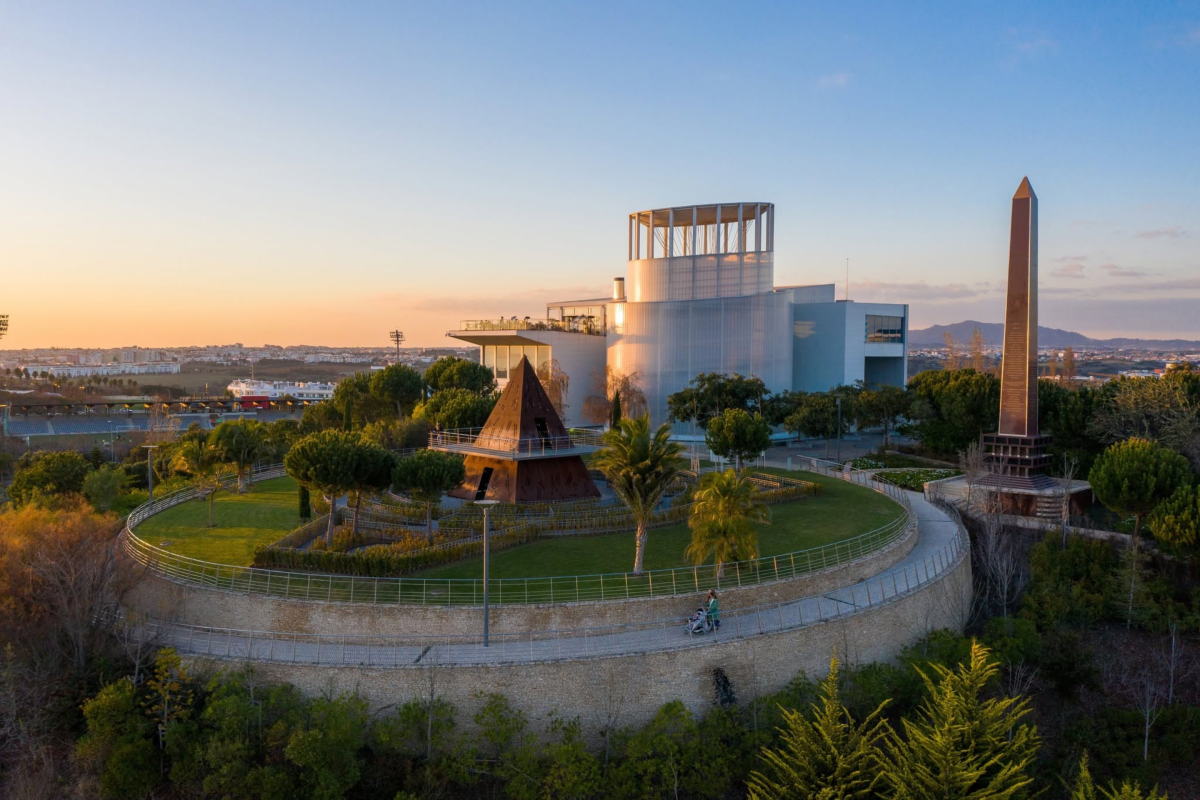
In Oeiras, just a few minutes from the waterfront, you’ll find a true open-air “park-museum” spanning about 22.5 hectares, where lush greenery blends with contemporary art and literature.
Scattered along the wide paths and lawns are sculptures by more than 40 renowned artists, such as João Cutileiro, which pay tribute to 50 Portuguese poets and 10 from other Portuguese-speaking regions.
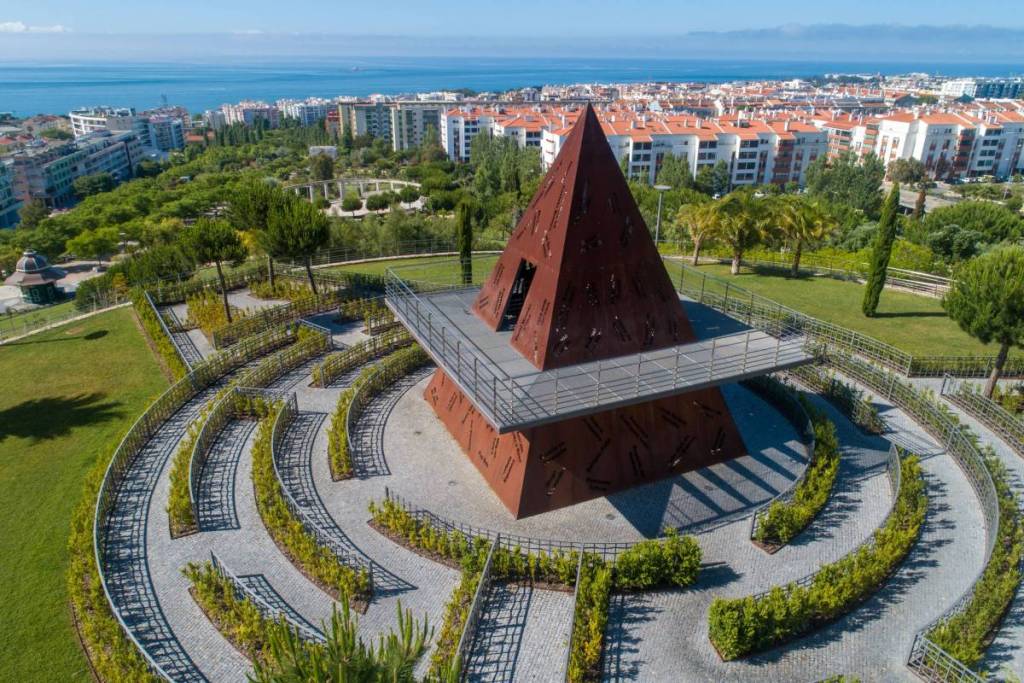
At the highest point of this vast green area stands the Temple of Poetry, a pyramid-shaped building that serves as a panoramic viewpoint overlooking the Tagus estuary and the Atlantic Ocean.
Along the way, you can explore themed areas like the Maze, the Island of Love, and the Cyber Fountains with water features set to music—all in a space fully adapted for families, with free parking and accessible paths.

The first is one of the city’s largest—spanning 26 hectares—and most spectacular parks: Eduardo VII Park, where you can do plenty of things.
It’s located at the top of Avenida da Liberdade, right in the center of Lisbon, and offers one of the best panoramic views of the city.
It’s one of Lisbon’s most popular parks for taking walks, with well-maintained gardens, fountains, sculptures, a playground, a picnic area, kiosks, restaurants, sports facilities, and fitness equipment.
This is also where the Book Fair takes place every year and, at Christmas, Wonderland Lisboa.

Originally named Parque da Liberdade, it was renamed after the King of England, Edward VII, during his visit to Lisbon in 1903.
It wasn’t until 1942, however, that architect Keil do Amaral designed it as we know it today, with a large central lawn adorned by a geometric composition of boxwood hedges, flanked by two wide tree-lined avenues with sidewalks paved with classic Portuguese cobblestones.
Eduardo VII Park features two major attractions: the Estufa Fria, which is incredible; and the Carlos Lopes Pavilion, where musical events—among others—are regularly held.

Parque das Nações is one of the city’s most modern spots, located in eastern Lisbon, on the banks of the Tagus River.
Once you’re here, you can visit and explore the Lisbon Oceanarium, one of the largest in Europe, where you can see various species of marine animals, including sharks, rays, and octopuses.
Another attraction of this park, in addition to its various green spaces and extremely beautiful gardens, is the popular Pavilion of Knowledge, an interactive museum dedicated to science and technology.

As we’ve already mentioned, at Parque das Nações you’ll also find plenty of areas where you can relax and stroll through the gardens (you’ll love the Garcia d’Orta flower beds) and along the banks of the Tagus River.
Parque das Nações was created for Expo ’98 and today is home to several tourist attractions, such as the Lisbon Oceanarium, the Pavilion of Knowledge, the Camões Theater, the Cable Car, the MEO Arena, the Vasco da Gama Shopping Center, and the Vasco da Gama Tower, which is one of the tallest buildings in the city.

Parque Tejo is actually part of Parque das Nações, but since it’s so large and has several points of interest, we think it deserves its own mention.
Especially since it received a major national investment to host World Youth Day, attended by His Holiness Pope Francis, who was in this part of the capital from August 1 to 6, 2023, and is now the venue for the Rock in Rio music festival.
At Parque Tejo, you can stroll through the green spaces, walk or run on the walking trail, and even play various sports such as skateboarding (with a skate park), cycling (with a pump track), soccer, and padel.
Here you’ll also find some playgrounds for children and a long stretch of waterfront along the Tagus River.

Tejo Park is located even further east of Lisbon, bordering the municipality of Loures and the parishes of Moscavide, Sacavém, and the Union of Parishes of Santa Iria da Azoia, São João da Talha, and Bobadela—some of which are bounded by the famous Trancão River.
This park in Lisbon covers about 90 hectares, making it the largest green space in Parque das Nações and one of the richest in biodiversity, with a vast natural area that makes it a prime spot for observing the wildlife of the Tagus estuary.
Tejo Park, therefore, is a space with a vast green area that invites you to take long walks with friends and family—and it’s one of our favorite places to fully appreciate nature.
Bela Vista Park

You’ve probably heard of Bela Vista Park because it hosts one of the city’s biggest music festivals, MEO Kalorama.
Every year, thousands of people gather here to see their favorite musicians during a weekend in late August filled with pure fun.
This park in Lisbon is undoubtedly one of the most incredible venues for hosting this type of event, since its layout—shaped like a natural amphitheater—allows everyone to have an excellent view of the main stage.

Bela Vista Park is one of Lisbon’s largest parks; it was once a farm and still retains its somewhat rural character today.
Here you can find various species of flora and fauna—mostly native to Portugal—as well as a wide variety of birds.
When the season allows, you can enjoy a vast green space, with wooded areas, meadows, and lawns, crisscrossed by a network of paths where you can walk, run, or ride a bike.
There are also, in the higher parts of the city, authentic viewpoints that offer sweeping views of the city and the Tagus River.

Commonly known as Quinta das Conchas, it’s one of Lisbon’s oldest parks, where you can stroll and relax in three distinct areas: the Central Garden of Quinta das Conchas, the Woodland, and Quinta dos Lilases, covering a total of 24.6 hectares of land.
Nave Central is the largest area, featuring vast lawns and unobstructed views, making it the perfect spot for a little ball play with the little ones and, of course, picnics with the whole family.
This is where you’ll find some of the recreational amenities most sought after by everyone, such as the playground, the café, the restaurant with an outdoor terrace, the stage for performances, the support building with a reception area and exhibition space, and the picnic tables.

The other two areas of Parque das Conchas are dedicated to different interests. In the Mata, you’ll find a denser forested area, where part of nature remains untouched.
If you’re a nature lover, you’ll find various species in this area of the park: Zelkova serrata, Himalayan cedars, Buçaco cedars, hornbeams, dogwoods, elderberries, and field maples.
At Quinta dos Lilases, which is separate from Quinta das Conchas, you’ll find a quieter spot, where an artificial lake takes center stage, with its romantic features designed to represent the islands of São Tomé and Príncipe.
Nature lovers will also find plenty to enjoy here.

The Parque Ribeirinho do Oriente is one of the city’s newest spots for nature lovers, having opened in early 2021.
It’s even been nominated for an international award, because it’s truly beautiful and is also located in a prime spot overlooking the Tagus River.
This Lisbon park is right there in Marvila, next to the new Prata Riverside Village developments.

As of the publication of this article, Parque Ribeirinho do Oriente covers a total area of four hectares, located between Braço de Prata and Doca do Poço do Bispo.
However, we know that a second phase is in the works that will expand the park’s total area—all the way to the Parque das Nações Marina—to eight hectares and nearly 1.5 kilometers.
For starters, you’ll find more than 350 trees, two walking trails, a bike path, a fully equipped playground, and various play structures for the little ones throughout the park’s entire current area.
There will also be support facilities, created from repurposed shipping containers, such as cafés, a bike rental shop, a library, and restrooms.

Here are a few reasons why you should visit one of Lisbon’s largest green spaces, the Monsanto Forest Park.
This natural park in Lisbon spans several hectares and is one of the places most cherished by Lisboners as the weekend approaches.
Here you’ll find several hiking trails, picnic areas, and incredible panoramic views of the city.
The park is also known for its variety of flora and fauna, featuring various species of trees, shrubs, and wildlife.
Well-equipped with facilities for staying in shape, Monsanto Forest Park is one of the best options for those who want to walk, run, or ride a bike while exploring nature and enjoying a peaceful atmosphere outside the city.

Among the various points of interest in this park—including the Monsanto Panoramic View, which we invite you to explore further—you’ll also learn that this vast park in Lisbon holds Forest Stewardship Council® recertification, the world’s most important certification regarding the environmental compliance of forestry operations, with the municipality demonstrating its commitment to maintaining high standards and rigorous requirements in forest management.