
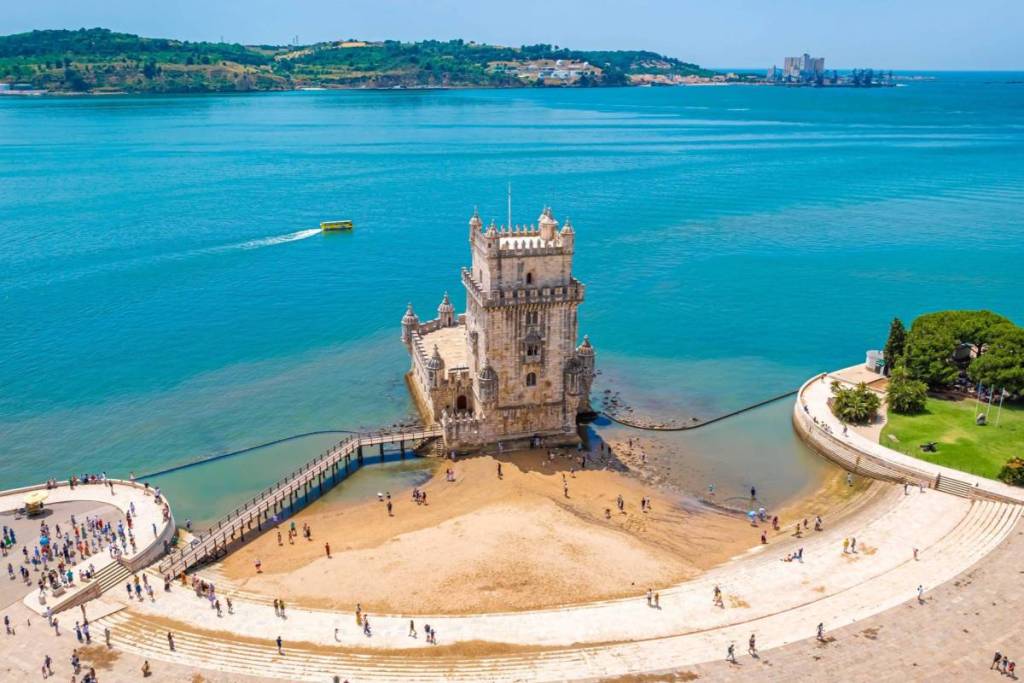

From rounding the Cape of Storms to the sea voyage to India in the 15th century, Portugal helped chart and push the boundaries of the unknown. In the Belém area, the ships set sail for overseas adventures. It was there that, in the 16th century, the old Restelo beach gained a new stone landmark: the Belém Tower. Today, more than 500 years after its construction, this postcard-perfect spot along the Tagus River continues to attract the attention of countless visitors.
It has been a National Monument since 1907 and a UNESCO World Heritage Site since 1983, a designation it shares with the Jerónimos Monastery. A military bastion, customs post, political prison, and lighthouse: the roles assigned to the Belém Tower (originally called the Tower of São Vicente, in honor of Lisbon’s patron saint) have changed over time. What has never changed is its imposing presence overlooking the river; and now you can explore its interior on a guided tour through its rooms, hidden nooks, and terraces overlooking the Tagus.
4 November 2026 11:00 + more dates
Torre de Belém
A Manueline fortress on the Tagus
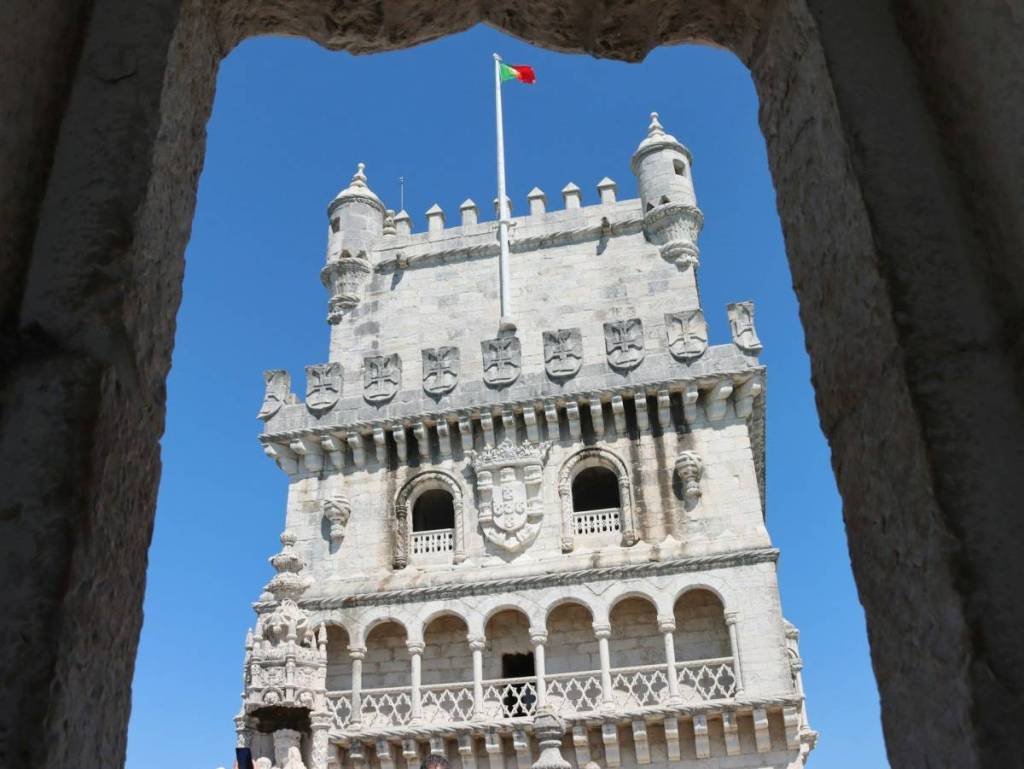
The Belém Tower was part of a defense plan for the Tagus estuary conceived during the reign of King João II and continued by King Manuel I. The goal was to protect maritime access to Lisbon through a system that combined fortifications and armed vessels. Commissioned by King Manuel I, the first stones of the Belém Tower were laid in 1514, and construction was completed around 1520, according to the Cultural Heritage website.
The design, by Francisco de Arruda, includes watchtowers with Moorish-inspired domes, and the façade features Manueline symbols such as the armillary sphere and the Cross of the Order of Christ. There is also an interesting fact about its origin: in the early days, the building stood on a small rocky outcrop. Over the centuries, the riverbank gradually advanced until it reached the structure.
From military life to a prison
One of the most memorable military episodes involving the Belém Tower took place in 1580, during the succession crisis, when the garrison surrendered to the troops of the Duke of Alba, who were paving the way for Philip II of Spain, the future Philip I of Portugal. Under Philip’s rule, the bastion’s former armories came to serve as dungeons for political prisoners, a practice that continued under King John IV.
From what you can see to the most recent renovation
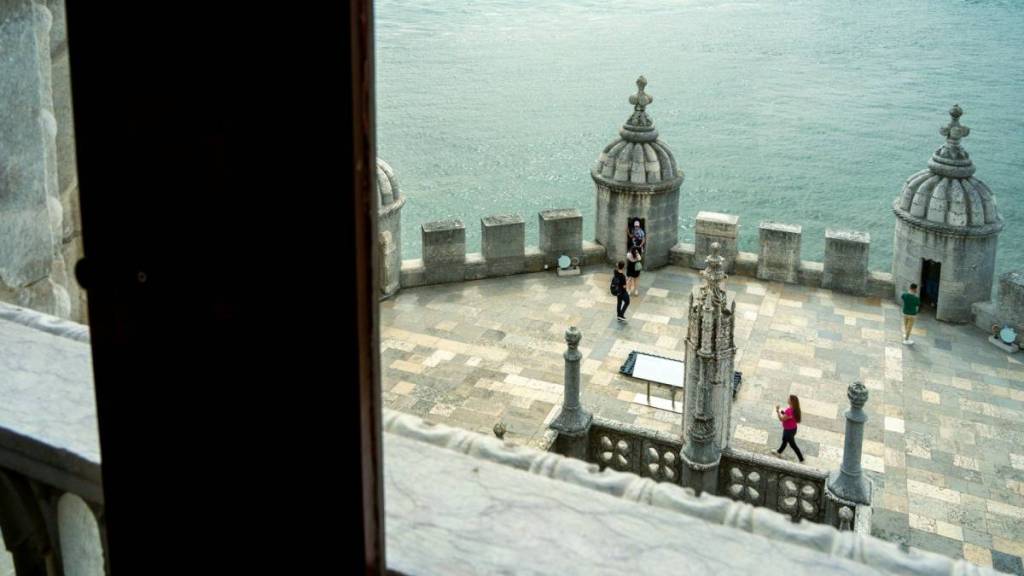
Inside the Belém Tower, you can visit the Governor’s Hall, the Hall of Kings, the Audience Hall, the Chapel, and the terrace. Movement between floors is via a narrow spiral staircase, which limits the number of visitors allowed at any one time.
According to the newspaper *Observador*, the Belém Tower was closed to the public for a year, as it underwent its first major restoration since 1998. The work cost approximately one million euros, funded under the Recovery and Resilience Plan (PRR), and led to changes in the monument’s visitor system. The reopening introduced a new time-slot admission system, limited to 60 people every half hour, to reduce lines and improve safety and preservation conditions at the monument.
If you’ve never climbed to the top of the Belém Tower, take the opportunity and get ready to take in a panoramic view that encompasses the Tagus, Belém, and the south bank!
Useful Information
Address: Av. Brasília, Lisbon, 1400-038.
Hours: Regular access to the monument is available Tuesday through Sunday, from 9:30 a.m. to 5:30 p.m., with last admission at 5:00 p.m.; guided tour times vary and are available Tuesday through Sunday at 11:00 a.m. and 2:00 p.m.
Tickets: Guided tours are available on Fever for €30 for youth (ages 15–24) and seniors (ages 65–99), €35 for adults, and €19 for children ages 0–14. If you prefer general admission, there are other options on Fever: free for children under 13; €12.32 for youth and seniors; and €16.80 for adults. Tickets can also be purchased on other online platforms and on the official Belém Tower website (it’s a good idea to check prices at other ticket outlets).
Don’t miss out! Follow us on Facebook, Instagram, and now on WhatsApp too!