
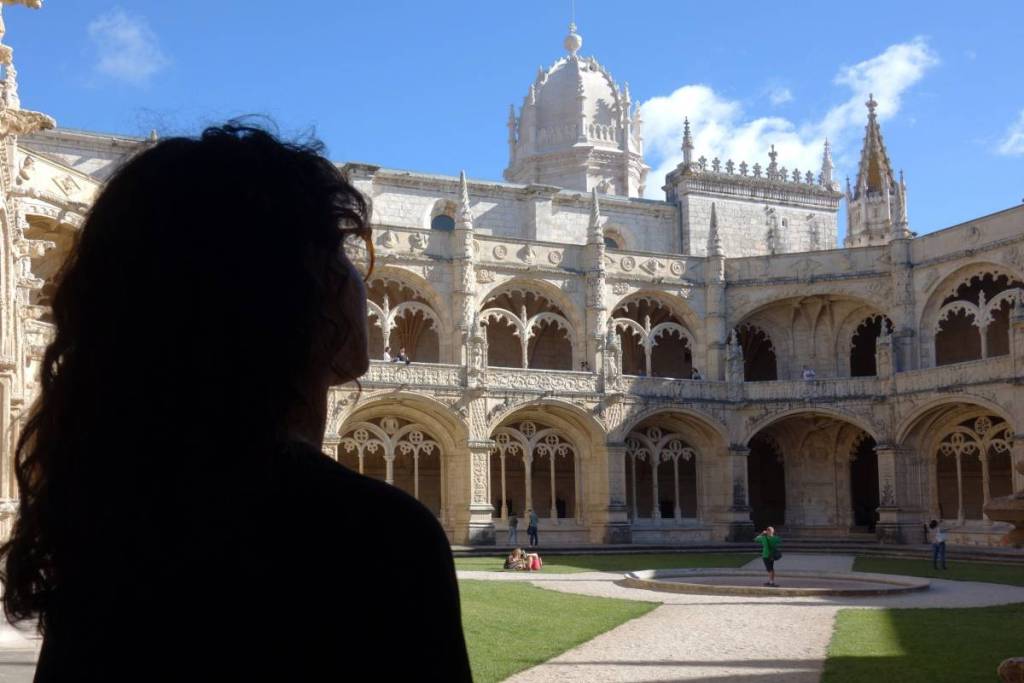

There are monuments we recognize even before we walk through the door—ones that are true postcard images of the city—and the Jerónimos Monastery is one such example. Designated a National Monument since 1907 and a UNESCO World Heritage Site since 1983, the building is, due to its grandeur and history, one of Lisbon’s main tourist attractions, but also one of those places that deserve to be (re)visited by those who live here. After all, when was the last time you strolled through its cloisters or noticed the Manueline details hidden in the stone?
Commissioned by King Manuel I in the early 16th century, the Jerónimos Monastery continues to stand out in the Belém landscape, thanks to its unique architecture, its proximity to the Tagus River, and the fact that it still surprises visitors today with new discoveries. In this article, we invite you to (re)discover one of Lisbon’s most iconic landmarks on a journey through its history, including a visit to the 16th-century cloister and the monks’ former refectory, among other points of interest. So, you can join the more than one million visitors who, in 2025, immersed themselves in the charms of this Manueline gem. And you can secure your admission with a single click.
22 October 2026 13:30 + more dates
Jerónimos Monastery
A project by King Manuel I and a tribute to maritime expansion

The history of the Jerónimos Monastery is closely linked to Portuguese maritime expansion. By the end of the 15th century, the small village of Restelo had already established itself as a sheltered harbor and a departure point for ships and caravels.
Shortly before Vasco da Gama’s arrival in India, King Manuel I requested authorization from the Holy See to found a monastery on the site of an existing chapel. Construction, which began at the start of the 16th century, would become one of the greatest achievements of his reign and one of the finest examples of the Manueline style—a distinctly Portuguese architectural style that blends Gothic elements with maritime, naturalistic, and religious motifs.
The Order of St. Jerome remained at the monastery until 1834, when the male religious orders in Portugal were dissolved. The monks devoted themselves to praying for the king’s soul and providing spiritual assistance to the navigators who set sail from there. Their connection to Belém also extends to pastries: according to the story shared by the Pastéis de Belém bakery, the famous recipe originated at the monastery.
Wandering through the cloister (and beyond)
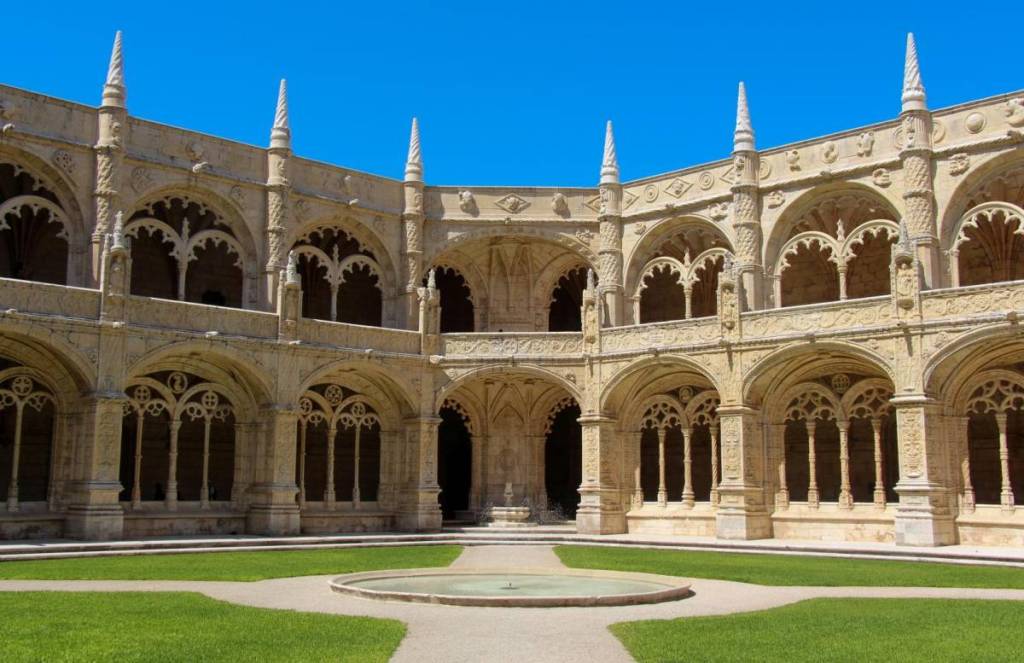
If the façade impresses you, wait until you have the chance to wander through its interior, where the 16th-century cloister stands out. Here, “lose yourself” in its details: the armillary spheres, the choir stalls, the sea monsters, and the crosses of the Order of Christ—all deserve your attention. Then, don’t forget to stop by the monks’ old refectory; in each of these spaces, you’ll find something to admire.
From Camões to Vasco da Gama: the illustrious residents of Jerónimos
The National Pantheon is known as the final resting place of many of Portugal’s illustrious figures, but not all of the great figures are buried there. The Church of the Jerónimos Monastery houses the tombs of Luís de Camões, Vasco da Gama, and King D. Manuel I himself. Fernando Pessoa, on the other hand, is buried in the cloister. Admission to the church is free, while a ticket is required to visit the cloister.
More than 500 years later, the Jerónimos Monastery retains the grandeur of the past and still manages to surprise with new discoveries. For example, in March of this year, restoration and conservation work on the church revealed 15 copper medallions—each two meters in diameter and placed 26 meters above the ground—that were virtually unknown to experts.
Useful Information
Address: Praça do Império 1400-206
Hours: Tuesday through Sunday, 9:30 a.m. to 5:30 p.m. (last admission at 5:00 p.m.)
Tickets: available on Fever, other online platforms, and on the Museums and Monuments of Portugal website
Don’t miss out! Follow us on Facebook, Instagram, and now on WhatsApp too!