
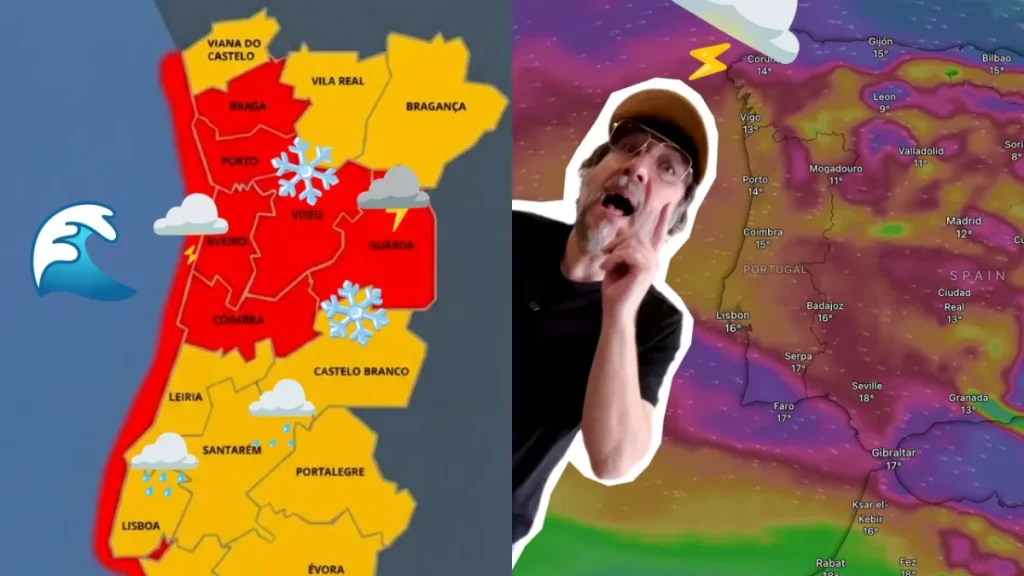

The reason is simpler than you might think: assigning proper names—such as Kristin, Charles, or Nuria—to storms has replaced technical jargon to make communication easier.
The goal is to make the message clearer to the public by replacing complex meteorological descriptions—such as the approach of an extratropical cyclone with a central pressure of 980 hPa—with a direct warning using a common name.
EUMETNET’s Selection Process
Names are selected by EUMETNET (the European Meteorological Network), and Portugal is part of this group along with Spain, France, Belgium, Luxembourg, and Andorra.
Every year, the meteorological services of these countries come together to create the official list that will be used in the region.
The list is in alphabetical order and alternates between male and female names, including options such as Alice, Claudia, Emilia, Harry, Joseph, Nils, and Oriana. However, the letters Q, U, X, Y, and Z are excluded from the selection.
IPMA Naming Criteria
Meteorological naming does not apply to just any rain event. A storm is only given one of the names from the official list when it reaches a high degree of severity.
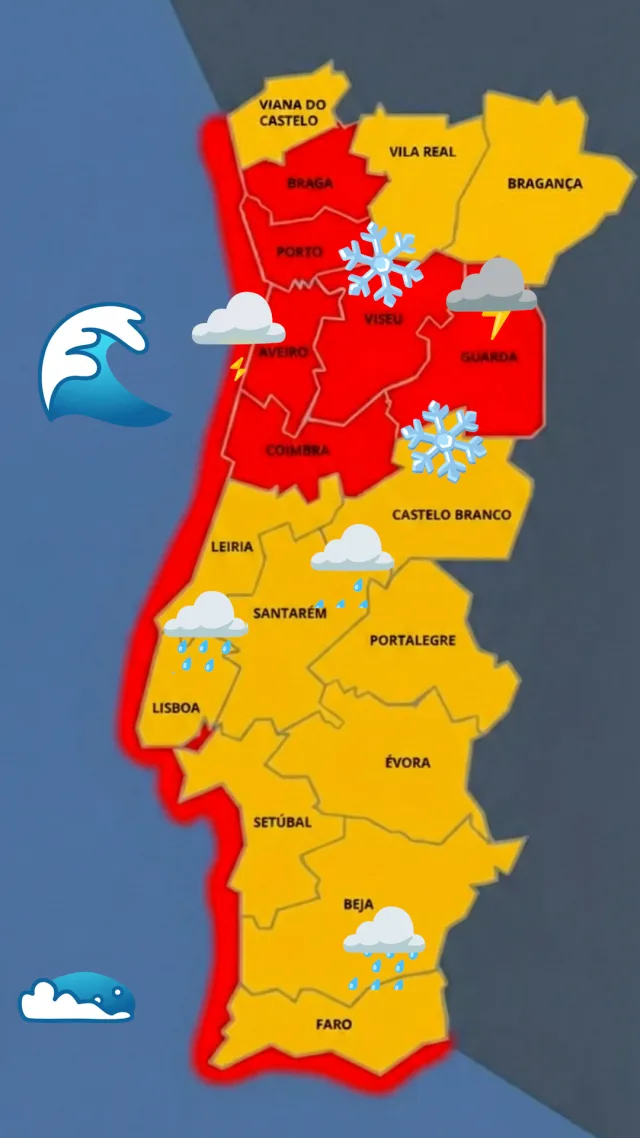
In Portugal, a storm is given its own unique name only when forecasts require the IPMA to issue orange or red alerts. However, if the severe alert is activated first in a partner country (for example, Spain), the storm is named there, and Portugal will use that name, even if the alerts in our country are only yellow.
Don’t miss out! Follow us on Facebook, Instagram, and now on WhatsApp too!