


The occurrence of major earthquakes and tsunamis within the country is a certainty,given the region’s history of active geological faults.
The warning comes from Jorge Ponte, a meteorologist at the Portuguese Institute of the Sea and the Atmosphere (IPMA), who offers a direct recommendation to the public: in the event of an earthquake strong enough near the coast, people should not wait for the sirens of the official warning system to sound; the immediate action should be to leave coastal areas and head immediately to higher ground.
Although the geological timescale prevents the accurate prediction of an earthquake— which could occur in the next minute or only a century from now—the capacity of the faults present in the territory to produce these extreme phenomena ensures that they will happen again in the future. The uncertainty lies solely in the exact moment of their occurrence.
The chaotic nature of the weather and public criticism
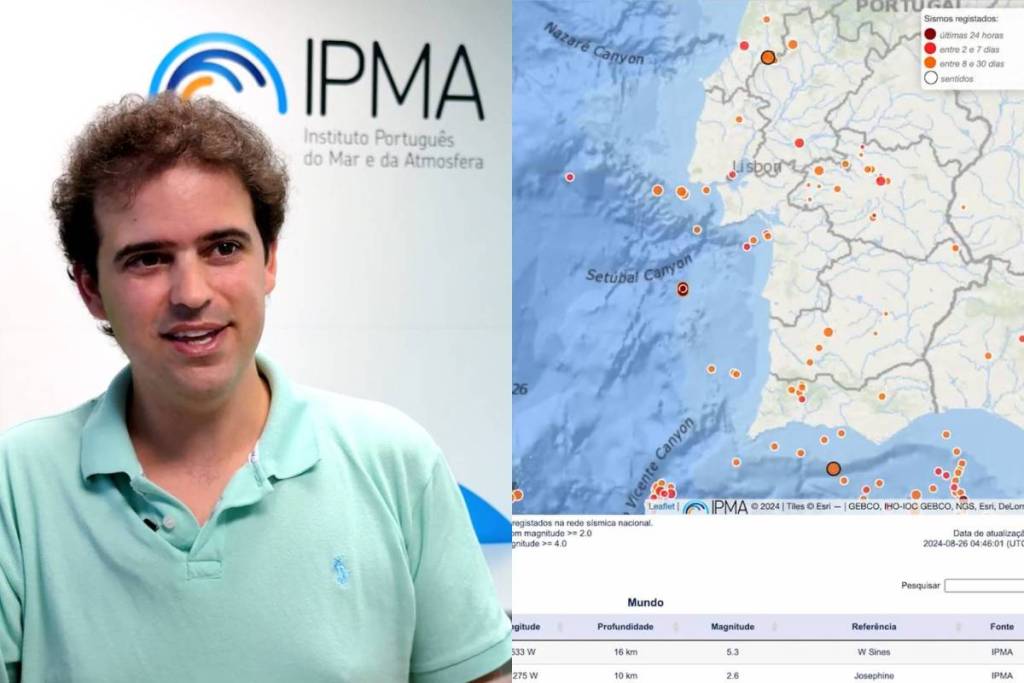
In addition to seismic phenomena, the IPMA expert addressed the practical difficulties of daily forecasts, describing meteorology as a chaotic system that often leads to frustration among the public.
One of the most telling examples occurs regularly in the capital region: it may be raining torrentially in the municipality of Odivelas, while just a few kilometers away, in downtown Lisbon, the sky remains clear and dry.
This meteorological discrepancy generates constant and paradoxical criticism of the IPMA. Jorge Ponte points out that residents of Odivelas may “complain” that the warning issued is only a yellow alert given the intensity of the storm they are facing. At the same time, residents of Lisbon, facing clear, sunny skies, criticize the issuance of the same yellow alert in the region, often accusing the forecasts of being erratic and the experts of lying.
To clarify how these hazard levels are assigned, the meteorologist detailed the rigorous technical criteria applied when issuing precipitation-related warnings:
- Yellow Alert
- Yellow Alert
- Red Alert
The Challenge of Rapid Response to Tornadoes
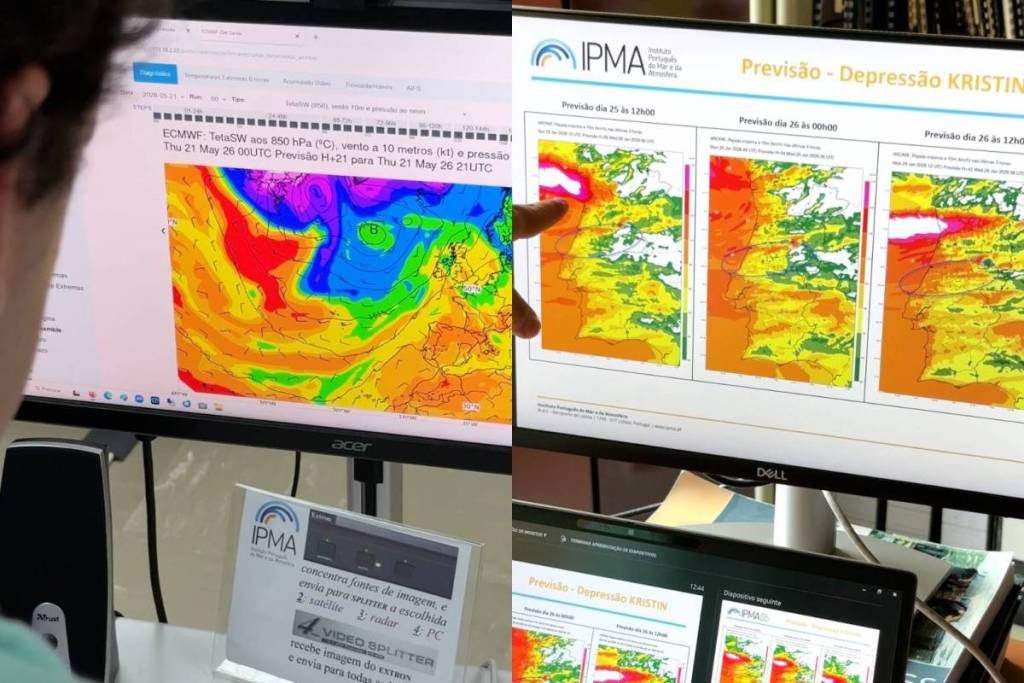
The unpredictability and rapidity of atmospheric dynamics hinder the monitoring of the most destructive systems; it is an undeniable fact that, to this day, we have not been able to overcome this challenge.
In the observation and forecasting of tornadoes, the window of opportunity to warn and protect the population is particularly narrow. The detection of severe tornadoes through monitoring systems allows the IPMA team to issue alerts with a very short safety margin, ranging at most between 15 and 30 minutes before the tornado makes landfall.
The structural disparities in warning times highlight the need for constant adaptation to nature’s different scales, requiring distinct responses from the public, whether it involves anticipating sudden weather fronts or reacting instinctively to the inevitability of seismic tremors.
Don’t miss out! Follow us onFacebook,Instagram, and now onWhatsApp too!