
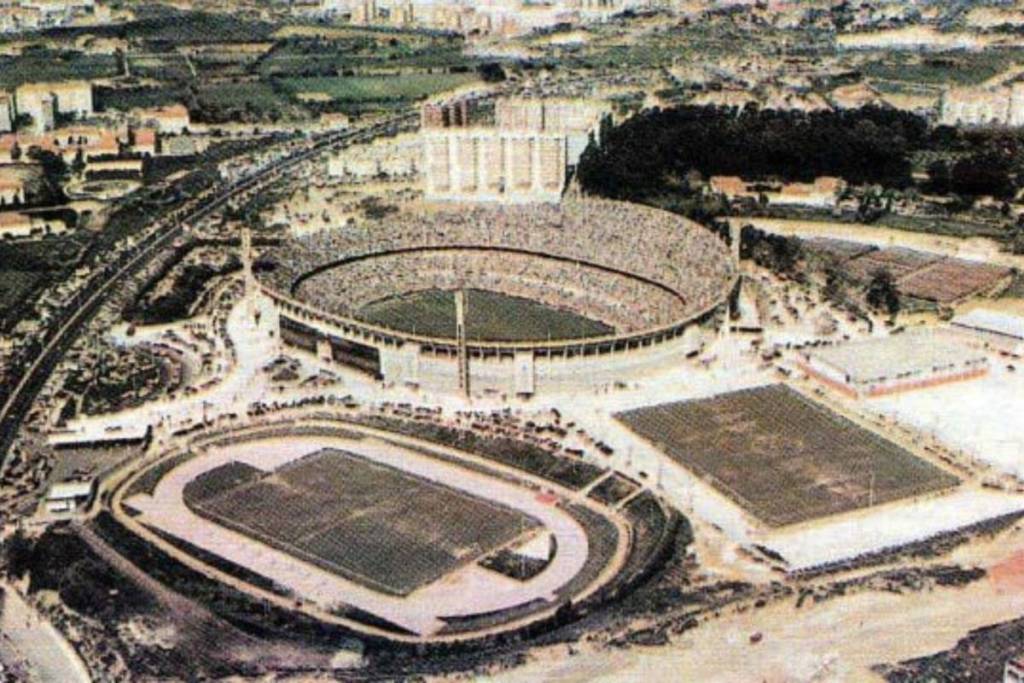

Opened in 1954, the legendary Estádio da Luz drew crowds unimaginable in modern soccer, most notably during a historic derby that tested the limits of its stands.
Perhaps today it would be impossible to hold an event of that magnitude. No matter how technologically advanced modern venues may be, there is no stadium in Portugal that even comes close to the human scale that the old Estádio da Luz embodied.
What was the Estádio da Luz like before Euro 2004?
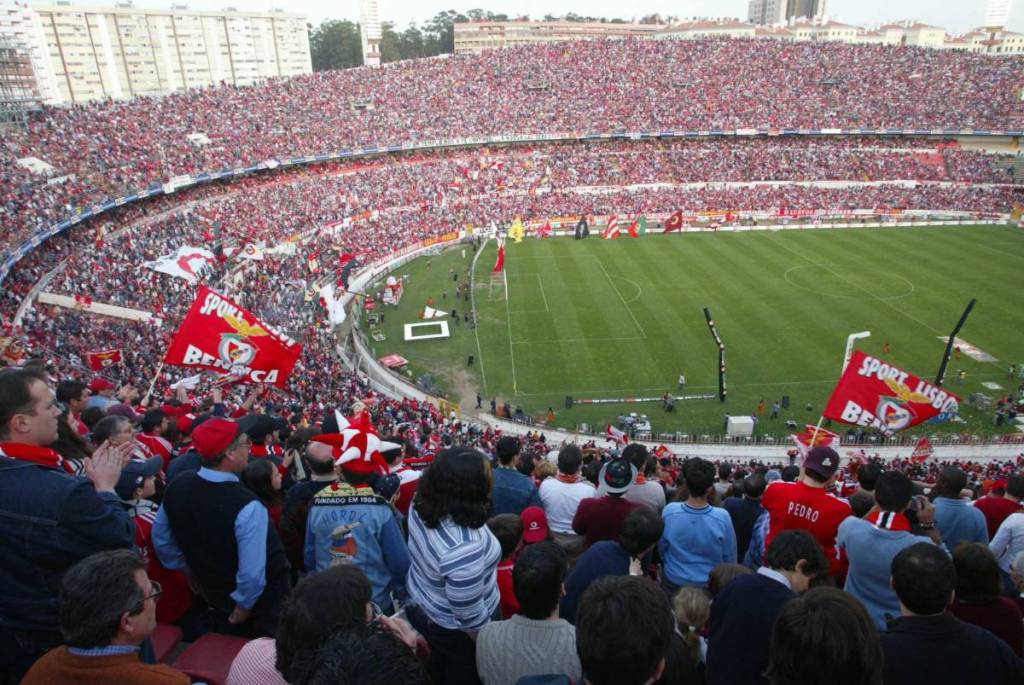
Before the inauguration of the new stadium, which served as the venue for several matches, including the Euro 2004 final, Sport Lisboa e Benfica played in a concrete behemoth that, at its peak, stood out as one of the world’s greatest sporting venues.
The history of this colossus began in 1954. Over the decades, and in response to the growing demands of a swelling fan base, the stadium underwent several expansions.
The most iconic transformation culminated in the completion of the “Third Tier,” raising the official capacity to an impressive 120,000 seats.
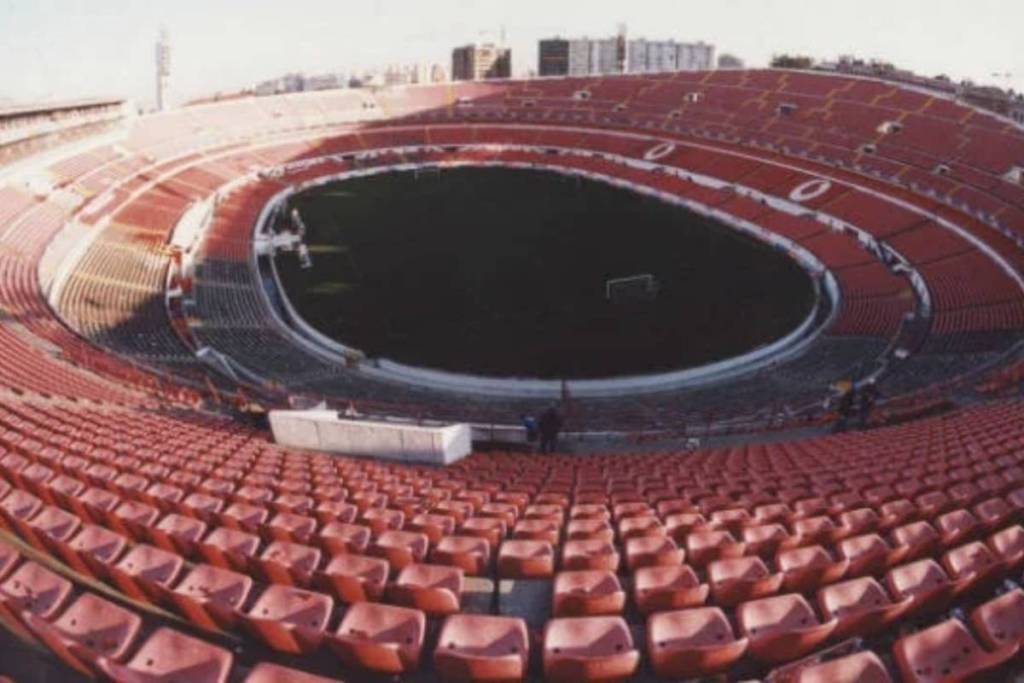
However, the stadium’s true capacity went beyond the official figures. The most extreme case of overcrowding occurred on January 4, 1987, during a heated derby against FC Porto.
The turnout was so massive that records and reports from that time point to an overwhelming attendance of approximately 135,000 people. It was an unbroken sea of people, a human backdrop that today would be immediately halted by UEFA’s strict safety regulations.
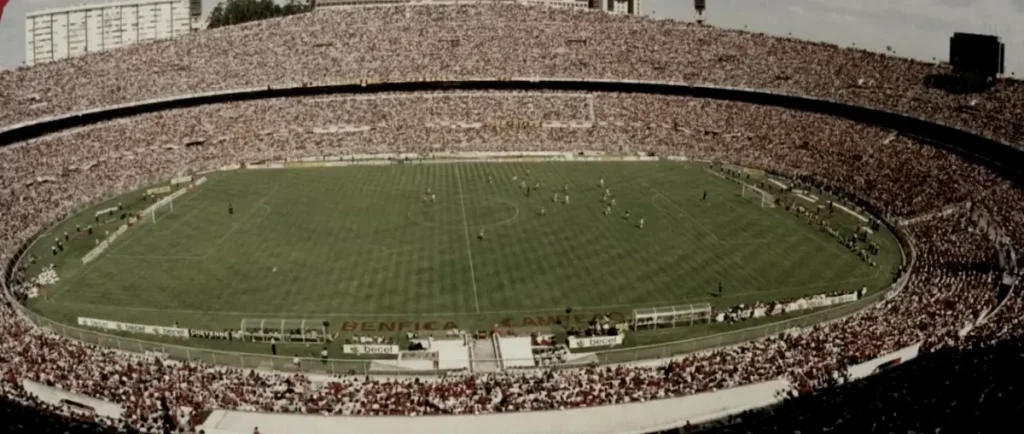
This was the highest attendance record at a Portuguese stadium, set at the old Estádio da Luz.
On that day, some 135,000 spectators watched Benfica’s 3-1 victory over FC Porto, with a hat trick by Rui Águas. Fernando Gomes scored the goal for the Dragons.
The End of the Old “Cathedral”
The era of this historic stadium came to an end after 49 years. In 2003, the stadium was decommissioned and gradually demolished to make way for the current Estádio da Luz, a substantially smaller facility designed to meet 21st-century standards of comfort and safety.
Although the old “Cathedral” now exists only in photographs and archival videos, its legacy remains intact. If you ever experienced sharing the same stadium with 135,000 other souls on a Sunday afternoon, that memory remains one of the most surreal and fascinating chapters in the history of Portuguese soccer.
Expansion of the new stadium… and the Benfica District

It’s true that it hasn’t gone beyond the drawing board yet, but it won’t be long before it becomes a reality, since the demands of modern soccer make it necessary.
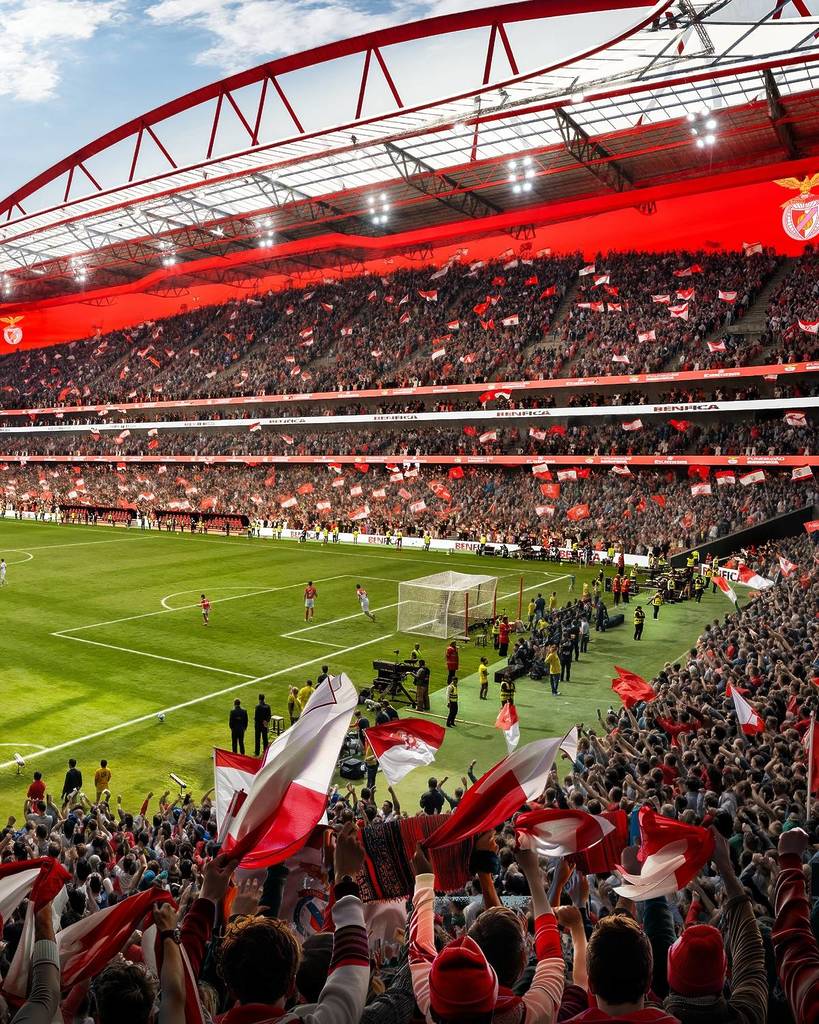
The plan is for the current stadium where Sport Lisboa e Benfica’s first team plays to expand from its current capacity of 68,000 to the final target of 80,000 seated seats, as outlined in the Benfica District project.

The urban and sports development plan, valued at approximately 220 million euros, aims to transform the area surrounding Estádio da Luz into an international hub for sports, culture, and entertainment by 2030.
Driven by club president Rui Costa, the project aims to modernize Benfica’s facilities ahead of the major international soccer competitions scheduled to take place in Portugal, including the 2030 World Cup.
Broadly speaking, the new complex will include a multipurpose arena with a capacity of 10,000 people (equipped for concerts and eSports), two new high-tech sports halls, a 25-meter community pool, an outdoor field, and a rooftop running track.
Outside, the leisure area will be transformed into a cosmopolitan hub open 365 days a year, featuring hotels, residences, shops, restaurants, an innovative theater, and a monumental plaza where fans can gather, prominently featuring a statue of Eusébio.
The Estádio da Luz, meanwhile, will be gradually expanded to reach a capacity of 80,000 seats, and will also feature a new dynamic LED facade and sustainable solutions, such as photovoltaic panels and green roofs.
Don’t miss out! Follow us on Facebook, Instagram, and now on WhatsApp too!