
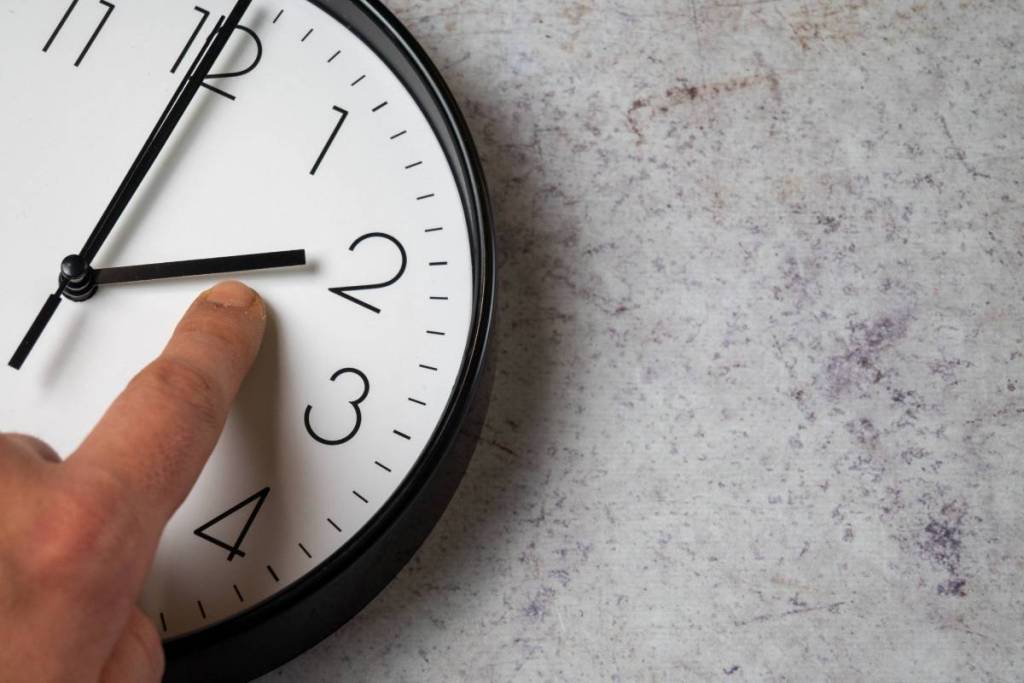

Summer is long gone, and so is its time. In the early hours of Sunday morning (October 24 to 25), don’t forget to set your clocks back one hour. When it’s 2 a.m. in mainland Portugal and Madeira, the time will become 1 a.m. (in the Azores, the change is from 1 a.m. to midnight).
After that, the clocks won’t change again until spring 2027, on the night of March 27–28. However, did you know that these seasonal changes haven’t always existed? In fact, there were times when we kept the same time all year round and others when Portugal tried to align with Central Europe. Shall we learn more?
Why do we change the time?
Daylight saving time is a practice that has been in place for over a century in Portugal. Here, the measure was introduced in 1916, in the midst of World War I, when Germany and other European countries decided to adjust the clock hands to make better use of sunlight and save on artificial lighting. But throughout the 20th century, there were several changes to this rule.
So when was the last time the clock hands weren’t adjusted?
According to this RFM article, mainland Portugal has had years without seasonal time changes, specifically in 1922, 1923, 1925, 1930, and 1933.
Furthermore, in 1966, an experiment was conducted that would make even the biggest sleepyheads jealous: daylight saving time remained in effect for the entire year. However, the most intriguing development of all was what followed: a prolonged period during which mainland Portugal did not adjust its clocks at all, lasting from April 1967 to September 1976.
Getting in step with Central Europe
Between 1992 and 1996, we had a different experience: mainland Portugal adopted Central European Time but kept the seasonal changes. So, as you can see, keeping the same time all year round is quite different from changing the time zone and continuing to adjust the clocks.
However, this arrangement was short-lived, as after four years in effect, it was decided to reverse the change. The reason? The government cited disruptions to citizens’ lives, including effects on sleep patterns and consequences for children’s learning rhythms—they ended up going to school while it was still dark!
Don’t miss out! Follow us on Facebook, Instagram, and now on WhatsApp too!