
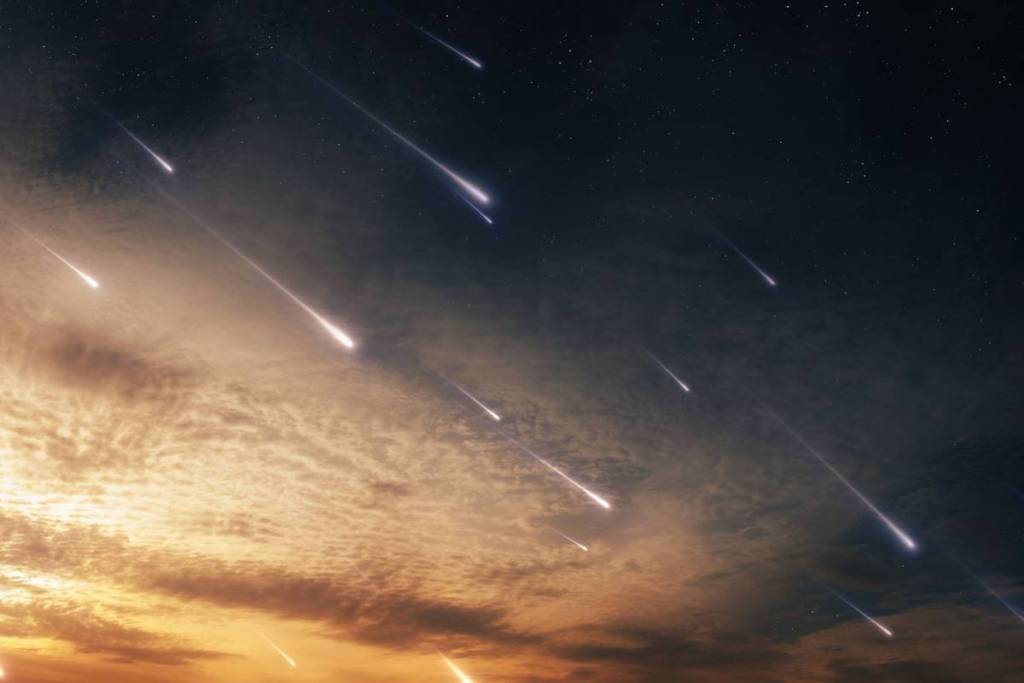

After the Draconids’ quiet passage, fall has another unmissable astronomical event in store for us: the Orionid meteor shower, active from October 2 to November 7. However, the best time to observe it will be in the coming days, with the peak expected on the night of October 21–22. Under a dark sky and in ideal viewing conditions, about 10 to 20 meteors per hour can be seen during the period of peak activity.
What are the Orionids?

The Orionids are considered one of the major annual meteor showers, but their origin may be just as interesting as the visual spectacle they provide. According to a recent article by BBC Weather, this meteor shower originates from debris left behind by Halley’s Comet—one of the most famous comets in our Solar System—and occurs at approximately the same time every year.
These shooting stars stand out for their speed. The particles enter Earth’s atmosphere at about 66 kilometers per second, creating luminous trails that streak across the darkness. Since Halley’s Comet completes one orbit around the Sun approximately every 76 years (its next return is not expected until 2061), this is the annual way we continue to see a glimpse of its passage.
Where to observe the meteor shower?
To observe this astronomical event, the best advice is to get away from light pollution by seeking out locations with minimal artificial lighting and an unobstructed view of the sky. Staying in the city of Lisbon isn’t the best choice, but even so, some locations may allow you to see the brightest meteors.
Within the capital, Monsanto Forest Park or poorly lit riverside areas may be reasonable options. However, for safety reasons, it’s best to go with someone else and check in advance whether these areas are accessible at night.
Outside Lisbon, about a half-hour drive away, there are a few locations with darker areas that, in theory, offer better viewing conditions—such as the south bank (like Fonte da Telha) or the coast of Sintra and Cascais. In any case, before you leave home, check the weather forecast, as it could make viewing difficult.
Practical Tips

To increase your chances of spotting meteors, in addition to choosing locations away from light pollution, take note of these tips:
- Give your eyes about 15 to 20 minutes to adjust to the darkness
- You don’t need binoculars or a telescope—the meteor shower is best viewed with the naked eye
- Scan the sky with your eyes, rather than focusing on just one spot.
- Keep the moon’s phase in mind: the moon’s brightness can obscure the fainter meteors, so try to turn your back to the moon while observing the sky.
Don’t miss out! Follow us on Facebook, Instagram, and now on WhatsApp too!