
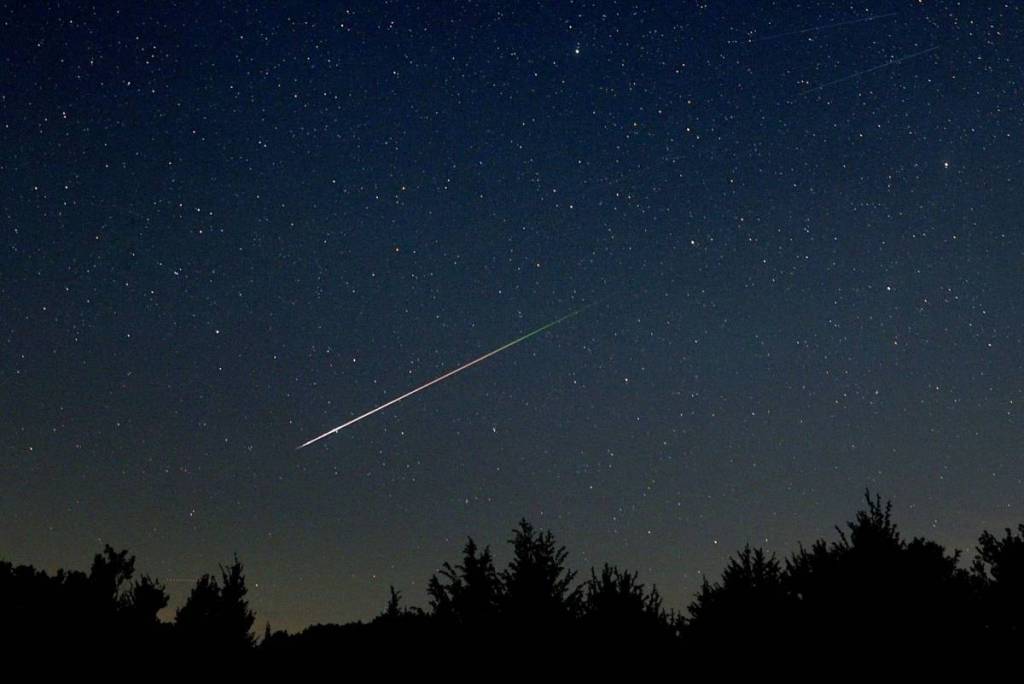

The full moon doesn’t arrive until October 26, but for fans of astronomical phenomena, there are other reasons to look up at the night sky: the Draconid meteor shower. Particularly visible in countries in the Northern Hemisphere, this phenomenon is expected to be active from October 6 to 10, with the peak expected to occur between October 8 and 9.
According to the specialized website Star Walk, no surge in Draconid activity is expected this year, so the show is expected to be relatively modest, with an estimated rate of about 5 meteors per hour under ideal viewing conditions. The actual number visible may, however, be lower.
There is, however, one major advantage to consider: the peak of the Draconids’ activity will occur close to the New Moon, scheduled for October 10. Under these conditions, there should be little interference from moonlight when observing this meteor shower. Nevertheless, it is important that weather conditions be favorable and, of course, that you view the shower froma location far from light pollution.
What time is the peak?

According to the Star Walk website , the peak of Draconid activity is expected on October 9, around 2:00 a.m. in mainland Portugal. Despite this, it’s worth starting to watch at dusk on October 8, when viewing conditions for the Draconids tend to be more favorable. To observe the meteors, no special equipment is needed—all you need is a clear sky, a little patience, and a location that offers an unobstructed view of the phenomenon.
Within Lisbon, an open area of Monsanto Forest Park could be an option to consider, provided it offers an unobstructed view of the sky and there are no lights directly in the field of view. However, anyone who misses this meteor shower has no reason to worry, as another one is on its way— the Orionid meteor shower, which peaks between October 21 and 22.
Don’t miss out! Follow us onFacebook,Instagram, and now onWhatsApp too!