
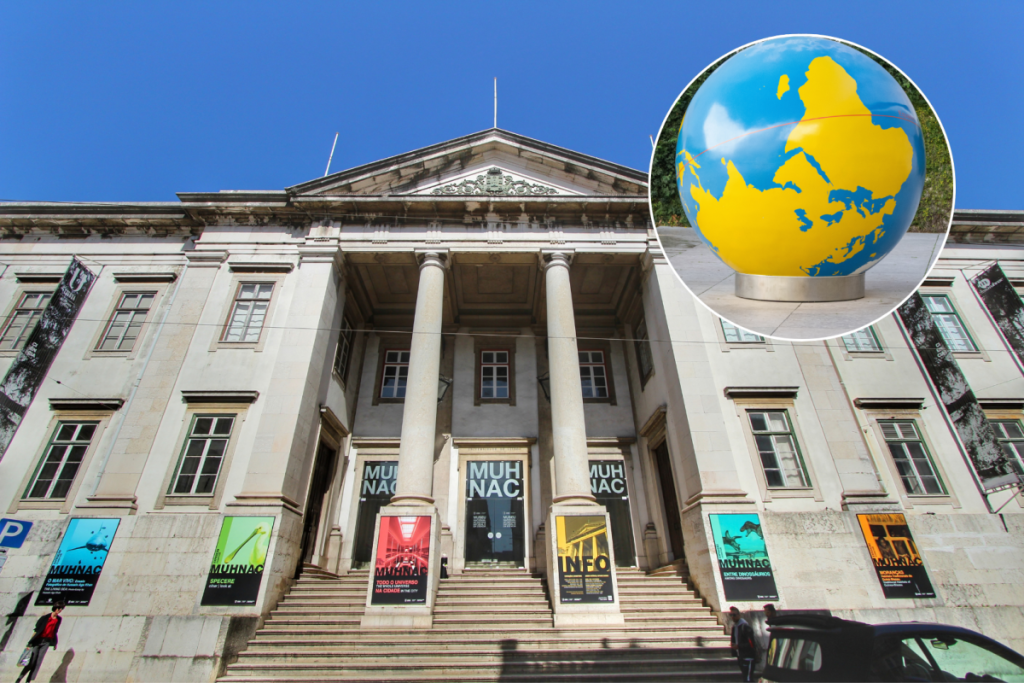

On September 25, scientists will leave their labs and come to meet you. This year, Lisbon will host two European Researchers’ Nights simultaneously: one in Príncipe Real, from 5:00 p.m. to midnight, organized by the University of Lisbon; the other at Parque das Nações, from 7:00 p.m. to midnight, organized by Ciência Viva. Both events are free and open to all ages.
European Researchers’ Night is an initiative of the European Commission that takes place on the last Friday of September in hundreds of cities. The name comes from the European initiative and is shared by all organizers—and since two Portuguese consortia are organizing it in 2026, Lisbon ended up with two events bearing the same name but with different programs. This is no mistake: you can attend both. We’ll highlight what we think is most interesting about each one. Shall we take a look?
Natural History Museum and Botanical Garden
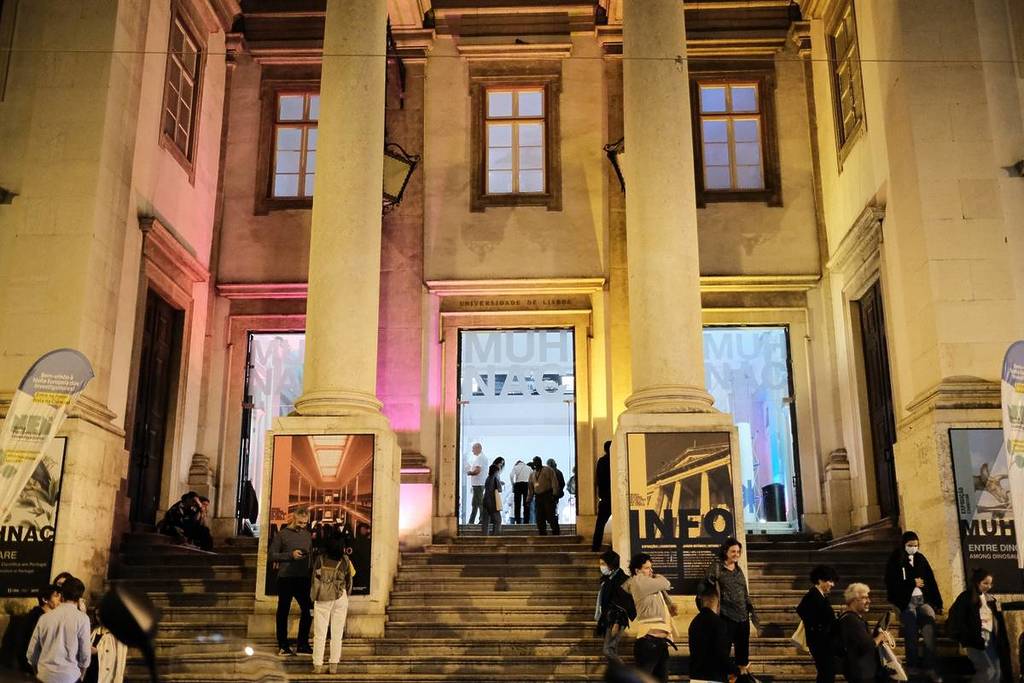
The organizers have announced more than 100 activities spread throughout the museum, the Botanical Garden, and, according to the Faculty of Sciences, also the Príncipe Real Garden, all taking place throughout the night with no set schedule—you walk in, wander around, and stop wherever you like. Among the more than 100 activities, we’ve chosen three that are worth the trip on their own.
An aorta bursting right in front of you
NOVA FCT presents a synthetic material that stretches like the wall of the aorta and a camera that shows the deformation in real time. The idea is for you to see for yourself when an aneurysm ruptures and how doctors decide when to operate.
Zebrafish larvae with a rare disease
Under the microscope, the Faculty of Sciences displays zebrafish larvae genetically modified to mimic primary ciliary dyskinesia, a rare disease—and explains why an aquarium fish is one of the best tools for finding treatments. For young people and adults.
A Virtual Reality Earthquake
The School of Architecture puts a pair of goggles on you and lets you experience an earthquake, to test a prototype designed to guide people during an emergency. Then, to unwind, you play Overgrown: on one hand, you destroy trees to build factories; on the other, you’re a kiwi throwing seeds to replant them. For all ages.
If you still have time, there’s a chromatograph measuring how much caffeine is in an energy drink, an experiment where you can “hear” the smell of a molecule converted into sound, and a booth that teaches you what to do when you find a stranded dolphin on the beach.
Address: National Museum of Natural History and Science, Rua da Escola Politécnica, 56–58
Time: September 25, 5:00 p.m.–12:00 a.m.
Admission: Free admission, no registration required
Pavilhão do Conhecimento

Here, the scale is different: about 400 researchers, 80 booths, and 60 projects, according to the Pavilion, under the theme “Bridges of Knowledge.” The booths are open all night; outside, there are food trucks, a book reading at 7:30 p.m., stories of the sea at 8:30 p.m., a casual chat with a drink in hand at 9:30 p.m., and a group photo at 11:50 p.m. With 80 booths, it’s impossible to see everything in one night; these three are a good place to start.
A hydrogen-powered car for you to drive
The CeFEMA booth—the physics center at the Technical University—explains how green hydrogen is produced and then lets you take the wheel of a small fuel-cell-powered car. No smoke, no noise—and with the answer to why these aren’t on the roads yet.
Real wolf howls
The Lobo Group brings footprints, tracks, images from camera traps, and real recordings of howls to explain how to study an animal that almost no one ever sees. It’s a booth for kids and parents alike.
Three robots mingling with the crowd
LOLA, TIAGo, and TIAGo Pro are humanoids from the Institute of Systems and Robotics at the Technical University of Lisbon, and throughout the evening they roam the Explora space interacting with passersby— they aren’t in a display case; they’re right in the middle of the crowd. In the same space, Lusófona University is showcasing a firefighting robot that detects and extinguishes a fire on its own.
If you still have time, there are live mosquitoes from the Institute of Hygiene and Tropical Medicine, the Tile Museum in virtual reality, and an audiovisual installation from the Portuguese Pavilion at the Osaka Expo. And outdoors, the “Bridges Put to the Test” challenge: you build a miniature bridge, test whether it withstands an earthquake, and take it home.
Address: Pavilhão do Conhecimento, Largo José Mariano Gago, 1
Time: September 25, 7:00 p.m.–12:00 a.m.
Tickets: Free admission; some activities require registration, as indicated in the schedule at nei.cienciaviva.pt
Don’t miss out! Follow us on Facebook, Instagram, and now on WhatsApp too !