
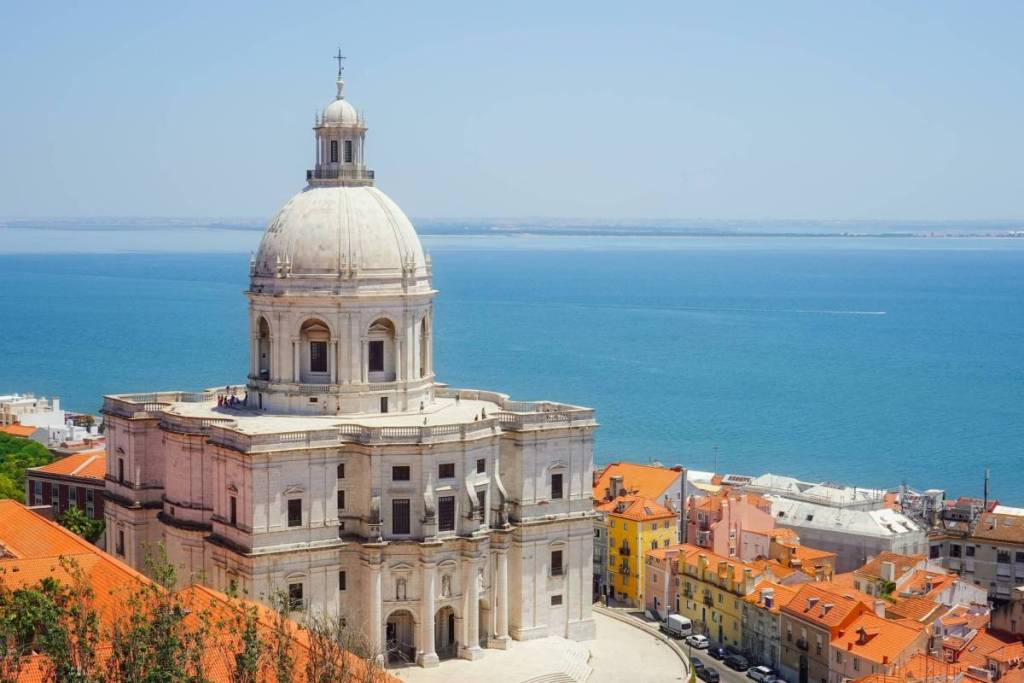

In 2001, Amália Rodrigues became the first woman to be honored at the National Pantheon, though she was not the only one to receive this tribute. The remains of the celebrated fado singer were transferred from the Prazeres Cemetery to the imposing National Monument—a designation granted in 1910—located in Campo de Santa Clara, where writers, poets, former heads of state, and other notable figures from the country are laid to rest.
But the history of this building holds other interesting facts. Did you know that the popular expression “obras de Santa Engrácia” originated in connection with its construction? In 1682, the first stones of the current Church of Santa Engrácia were laid, after the chancel of the previous church had collapsed during a storm. However, construction was not completed until nearly three centuries later, in 1966, when the building was inaugurated as the National Pantheon.
Today, you can join the nearly 170,000 visitors who visited the monument in 2025. During your visit, you can explore the burial chambers, admire the undulating walls, and climb up to the terrace to enjoy a different perspective of Alfama and other parts of the city. Shall we learn more?
15 November 2026 10:00 + more dates
Panteão Nacional
Visiting the National Pantheon with Eusébio
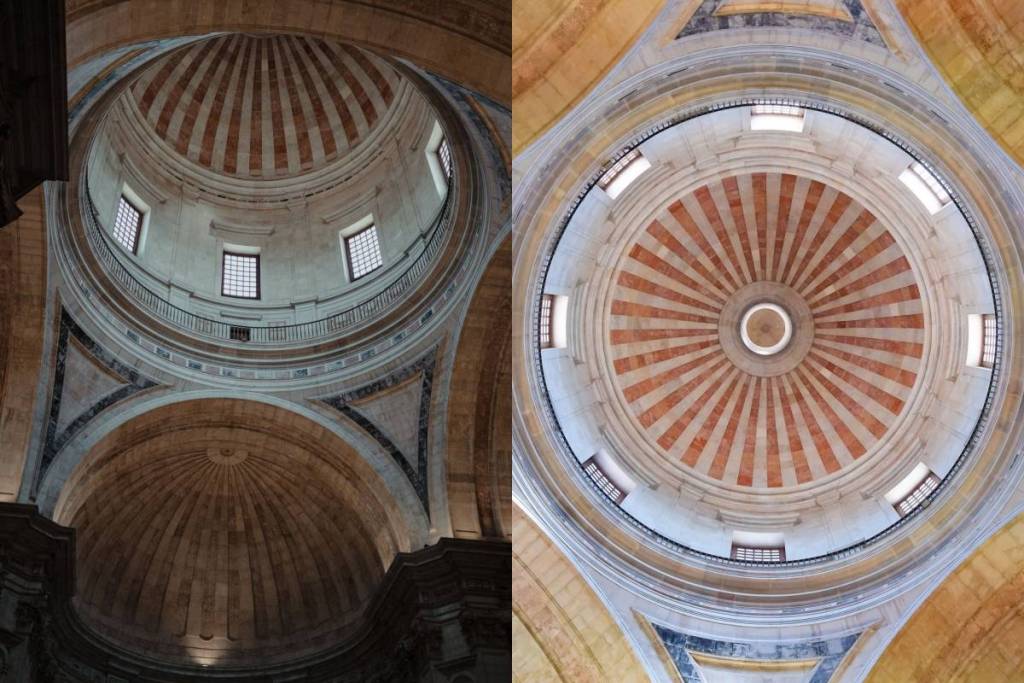
The architecture of the National Pantheon is well worth observing both from the outside and the inside. From the outside, the white marble makes this building visible from different perspectives at various viewpoints throughout Lisbon. Inside, the Greek cross floor plan—with four arms of equal length—stands out, as do the colored marbles that shape a space dominated by the imposing dome.
In the central nave are the cenotaphs of Luís de Camões, Vasco da Gama, Pedro Álvares Cabral, Afonso de Albuquerque, Nuno Álvares Pereira, and Prince Henry the Navigator. These are symbolic funerary monuments that pay tribute to great figures in Portuguese history, though they do not contain their remains. Aristides de Sousa Mendes is also honored at the monument through a commemorative plaque unveiled in 2021.
In the four burial chambers on the ground floor, figures from various fields are laid to rest. In addition to the aforementioned Amália Rodrigues, you can find the tombs of: Eça de Queiroz, Sophia de Mello Breyner Andresen, Humberto Delgado, João de Deus, Guerra Junqueiro, Aquilino Ribeiro, Almeida Garrett, Óscar Carmona, Sidónio Pais, Teófilo Braga, Manuel de Arriaga, and the famous soccer player Eusébio.
The curse of Simão Solis, according to legend
As we mentioned earlier, before it became the National Pantheon, this place was associated with an alleged curse. Legend has it that this was the reason the construction took so long. In 1630, the theft of consecrated hosts from the original Church of Santa Engrácia led to the indictment of a man named Simão Pires de Solis.
He was a New Christian (a Jew who had converted to Christianity), who had been seen in the area at night. He was accused, tried, and sentenced to death at the stake. However, according to legend, he proclaimed his innocence until the very last moment and cast a curse: the construction of Santa Engrácia would never be completed. We already know how it turned out: it took 284 years to complete the building.
But the history of the National Pantheon isn’t made up solely of legends and illustrious figures. On the terrace, another surprise awaits you: a panoramic view of the city of Lisbon!
Useful Information
Address: Campo de Santa Clara, 1100-471 – Lisbon
Hours: Between October and March, Tuesday through Sunday, 10 a.m. to 5 p.m.; between April and September, from 10 a.m. to 6
p.m. Tickets: €10 (adults) available on the official website; you can purchase tickets on Fever according to the dates and time options listed on the platform.
Don’t miss out! Follow us on Facebook, Instagram, and now on WhatsApp too!