

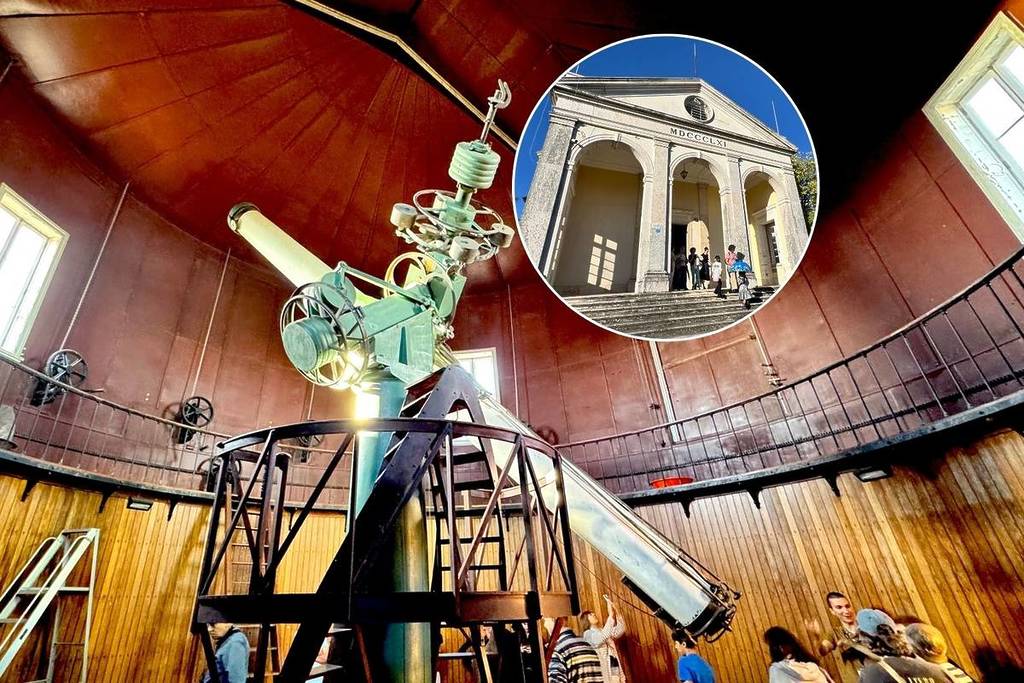
When we think of the highest points in Lisbon, we easily remember that we live in the city of the Seven Hills, or that we can visit some of the most incredible viewpoints in the world. However, the city’s usual sightseeing routes rarely take us to the place that once put Portugal on the world science map, the Royal Astronomical Observatory of Lisbon (ROAL), which is tucked away in the green lung of Tapada da Ajuda, far away from the queues of tourists visiting our capital.
More than just an old 19th century building, the Royal Astronomical Observatory of Lisbon is a time capsule, and visiting this space is not just about seeing telescopes; it ‘s also about understanding the scientific ambition of a country that dared to touch instruments that literally measured the sky.
A project of national affirmation
Ordered to be built by King Pedro V in the 1850s, the country decided that it needed to assert itself as a scientific power and there was nothing better than building an astronomical observatory to rival the best in Europe.
The construction of what is now known as the Royal Astronomical Observatory of Lisbon was carried out, and the choice of the top of Tapada da Ajuda took into account the fact that this area of the city offered clear skies (at the time) and a guarantee of stability for the meticulous precision equipment.
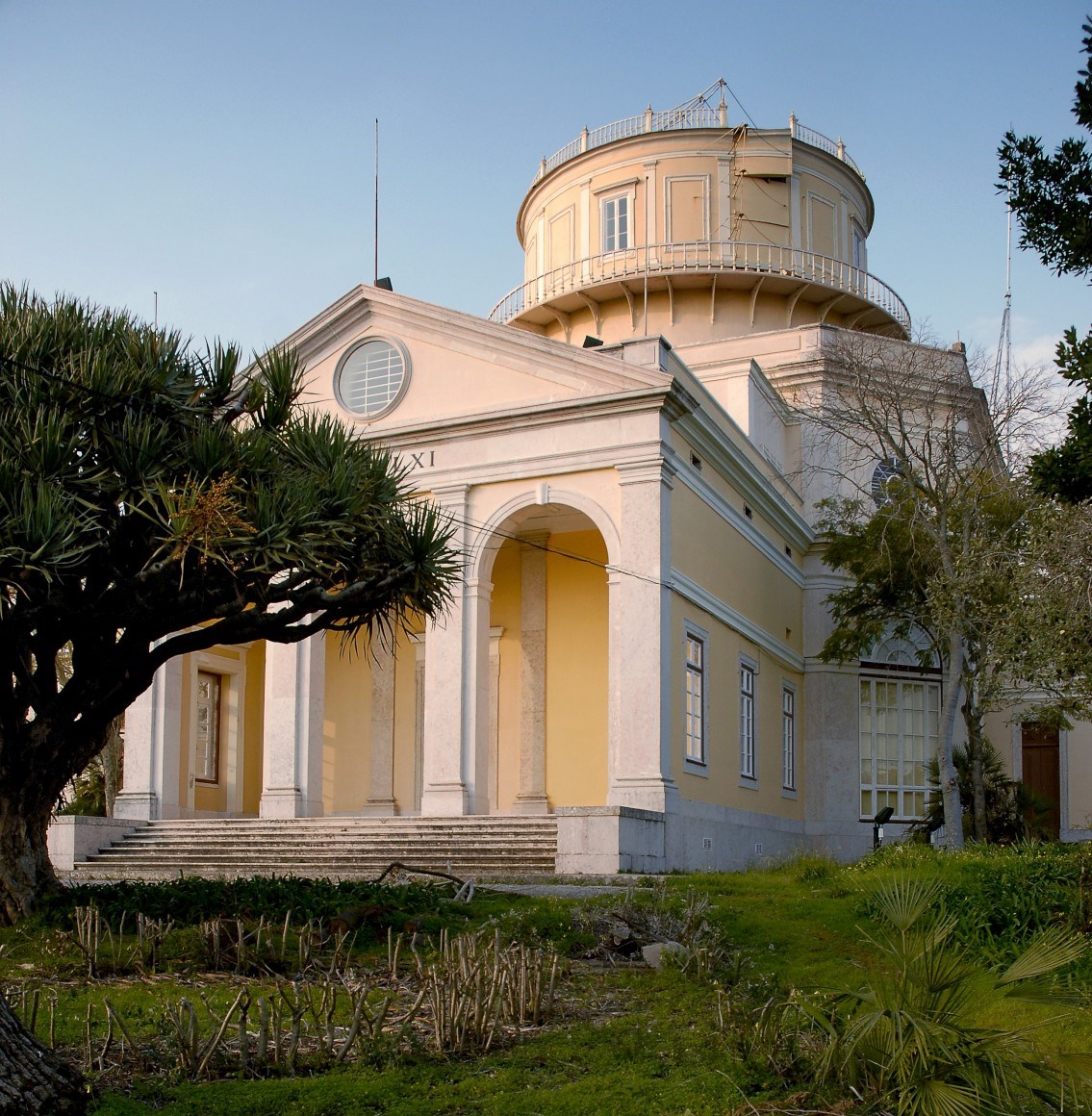
The result was this building of noble architecture, which was thought out to the millimeter for what it was intended to do: observe the firmament with millimeter precision.
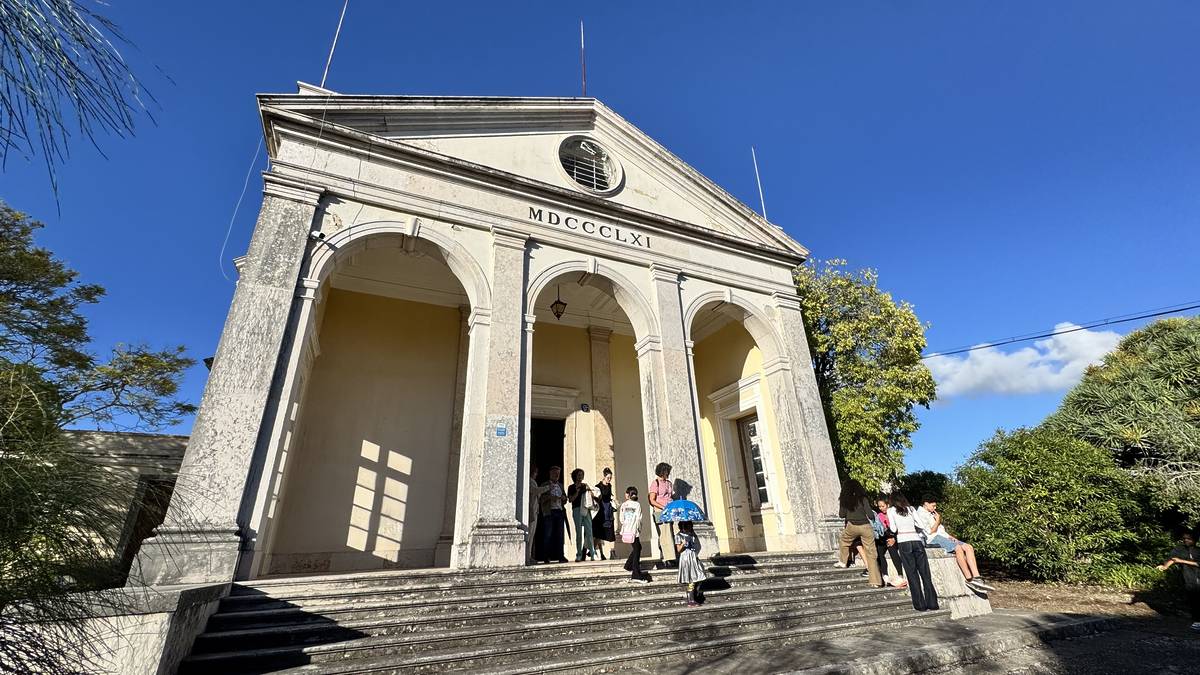
Classified as a National Monument of Public Interest, it was designed by the French architect Jean-Colson, based on the drawings of the Pulkova Observatory in Russia, which was built between 1861 and 1878.
Visit the Royal Astronomical Observatory of Lisbon
A visit to the ROAL will guarantee you a lot of knowledge, but you should do it for two main reasons:
- the beauty of the interior of the space, which although quite dilapidated in some places (ceilings, exterior space, etc.);
- and the observation instruments, many of which, around 200, are still in their original locations and perfectly preserved.
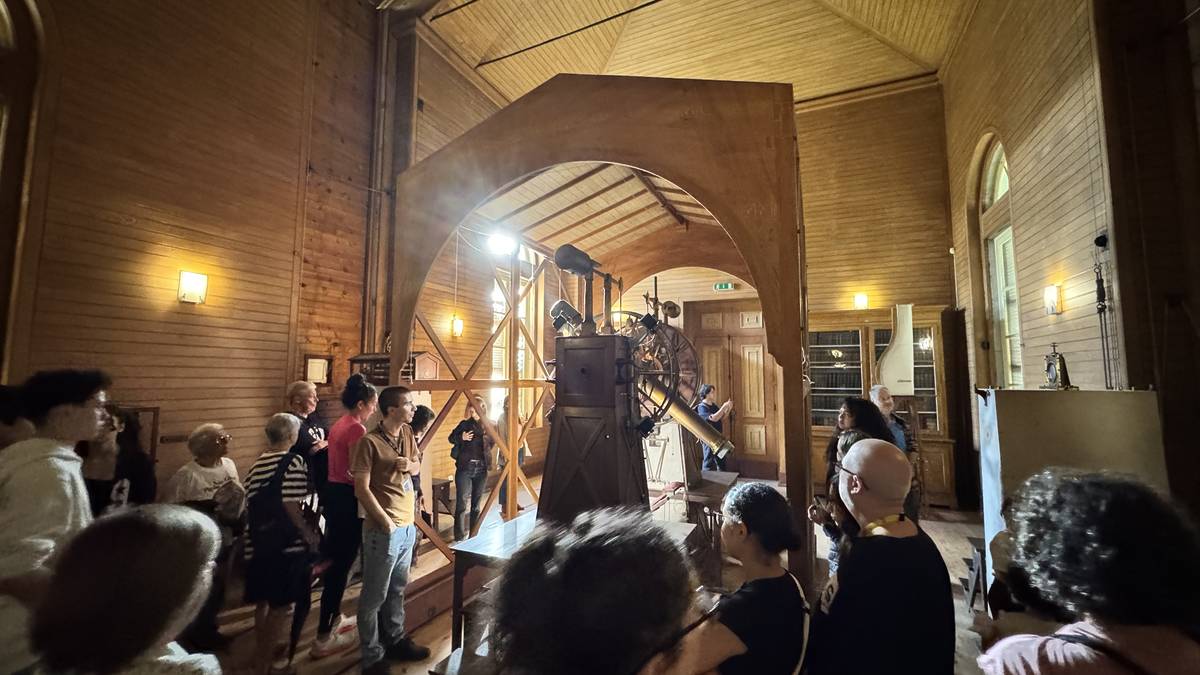
In the Great Equatorial Room, which is the “heart” of this observatory, there is the “Great Equatorial”, a lens 38cm in diameter and 7m focal length, installed here in 1867.
Imposing and mounted in cast iron and polished brass, it is the greatest attraction of this area and allows you to imagine how astronomers of the time worked, manually operating this machine to follow the movement of stars.
The ROAL was built with specific rooms (the Meridian Rooms), which were dedicated to transit instruments, and devices such as the Meridian Circle were essential for measuring the exact positions of the stars, helping to determine, for example, the legal time, which changes twice every year (summer time and winter time).
For decades, this is where Portugal’s “Official Time” came from .
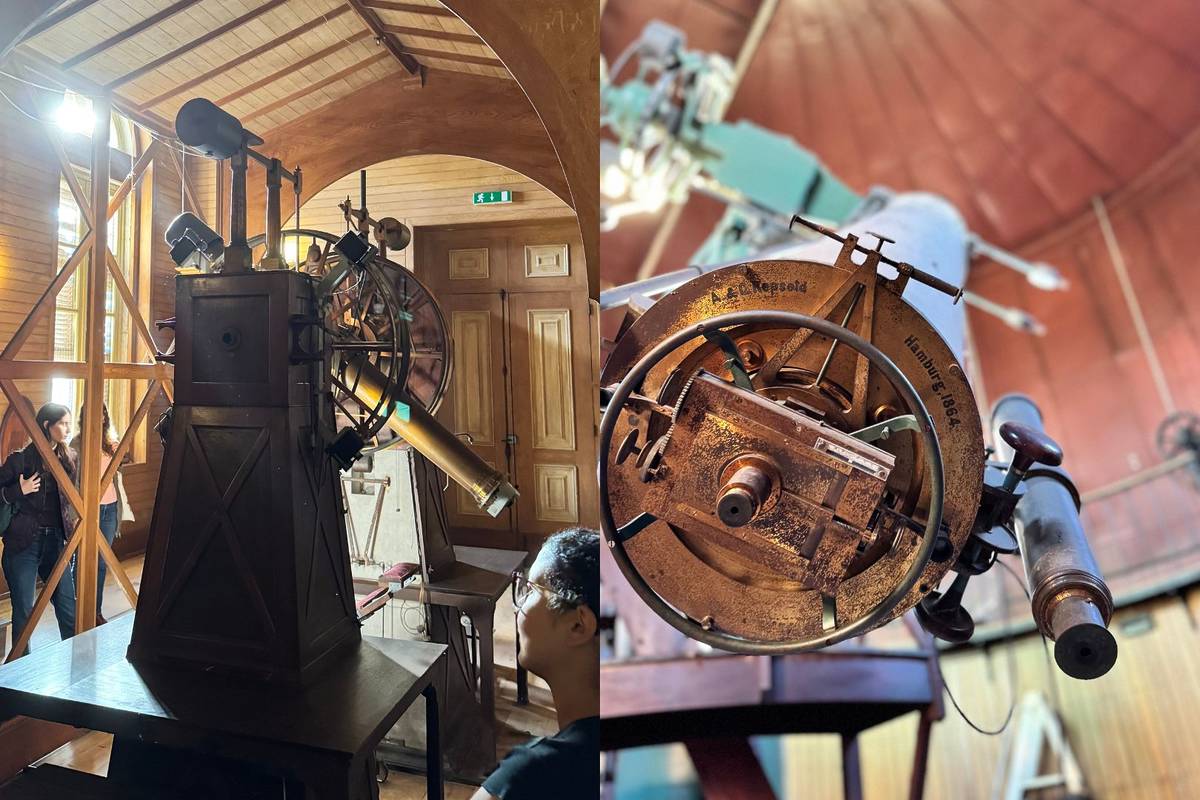
These are just some of the pieces and instruments you’ll find inside, but the ROAL building itself is a piece of science: the rooms were built to guarantee maximum stability, both thermal and seismic, the rotating domes, the deep pillars that support the telescopes (separate from the main structure of the building) and the observation windows reveal that everything was built with a very rigorous purpose.
Is it possible to visit? What state is it in?
In simple and quick answers: yes and dilapidated! The ROAL is currently part of the University of Lisbon, through the National Museum of Natural History and Science, and its visit is a radical experience compared to the more usual tours of museums. This is an opportunity to:
- discover a “secret” place and feel the privilege of being in a historic location, still far from the crowds (we don’t know what will happen after we publish this article, modesty aside);
- travel back in time to understand science in a pre-digital era, where precision mechanics, optics and human patience were the only tools;
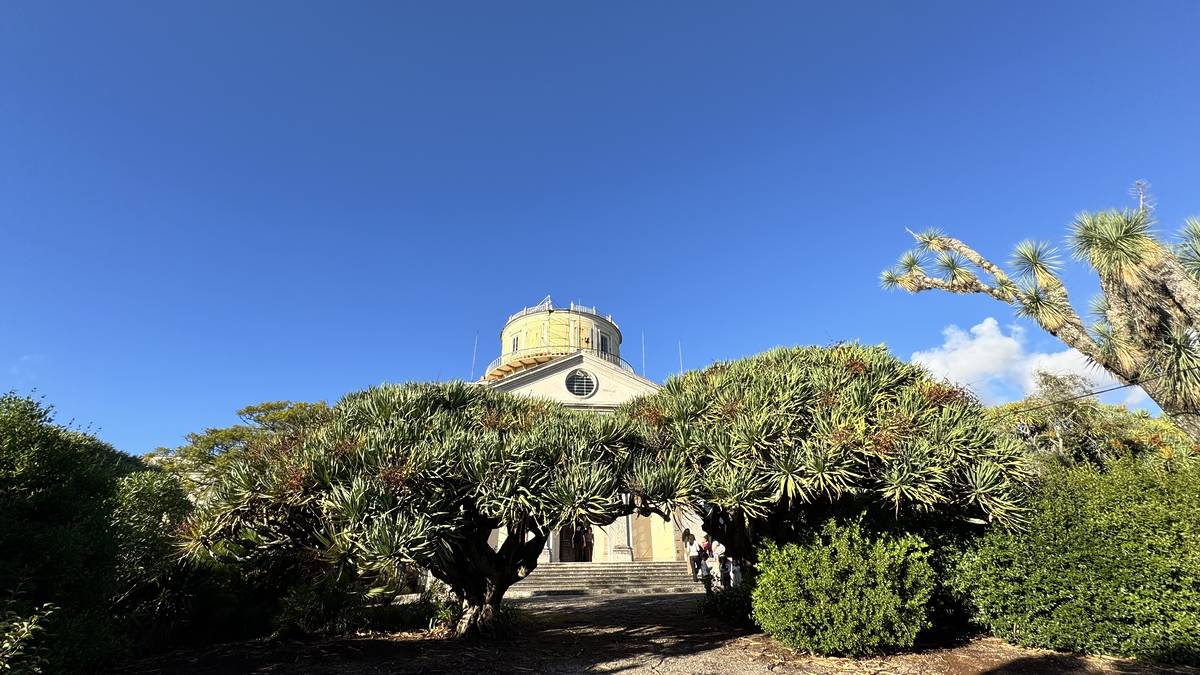
- contemplate the city and enjoy the silence and unique views that Tapada da Ajuda offers over Lisbon and our Tagus River.
And degraded because, on our most recent visit, we were a little saddened by some of the elements that we describe here as inappropriate for a space that claims to be a place of knowledge, which tells part of our history as an avant-garde country.
Our aim is simply to alert the authorities responsible so that something is done for this place, so that investment is made in improvements, both inside and out:
- The lack of any signposting to the main door made us fumble around to find the entrance, so we arrived a little late for the guided tour (last Wednesdays of each month, between 3pm and 4pm);
- The outside area is extremely poorly looked after, with the flowerbeds deserving extra attention, as well as the walk around the ROAL, which is quite slippery on rainy days (which was our case);
- When we looked up at the entrance portico, we noticed a huge hole, perhaps the result of several years without any kind of maintenance;
- Inside, just in the Great Equatorial Room, we noticed several buckets and waterproof tar paulins to protect the museum pieces, due to the holes in the roof that let rainwater through.
It should also be noted that the staff, both the lady who welcomes visitors and the guide, are unsurpassed in their work and therefore deserve, more than anyone, our “call to attention” to those in authority.
We would very much like to return there in the future and see most – if not all – of these problems finally resolved.
At a time when instant experiences are in vogue, the Royal Astronomical Observatory of Lisbon offers something very rare: a pause to appreciate engineering, history and the dimension of time, and is undoubtedly one of the Portuguese capital’s most valuable and lesser-known treasures.
Address: Tapada da Ajuda (entrance via Calçada da Tapada and then on foot, uphill for about 15 minutes)
Opening times: guided tours on the last Wednesday of the month, from 3pm to 4pm (parking lot at Parque do ISA), except on public holidays
Tickets: free, no registration required
Don’t miss out! Follow us on Facebook,Instagram and now WhatsApp too !