
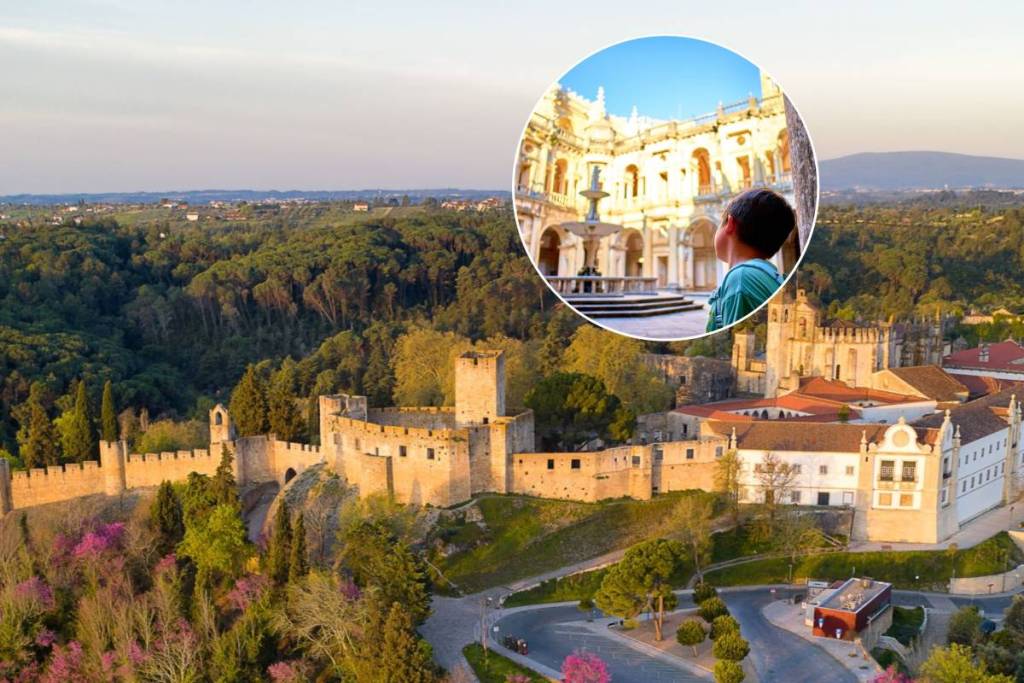

About a 1.5-hour drive from Lisbon lies the former home of the Knights Templar: the Convent of Christ in Tomar, in the district of Santarém, a National Monument since 1910 and a UNESCO World Heritage Site since 1983. After the Jerónimos Monastery and the Belém Tower, this is yet another stop on the journey to (re)discover Portugal’s World Heritage sites. In September, two of its cloisters reopened to the public following restoration work funded by the Recovery and Resilience Plan (PRR).
Today, you can join the more than 350,000 visitors who, in 2025, visited the monument to learn more about the legacy of the Knights Templar and take plenty of photos of the impressive scenery. The Convent of Christ is synonymous with an affordable cultural getaway: a regular ticket costs €15, and children 12 and under get in free. And what will you find inside? The Templar Charola, the iconic Chapter Window, and cloisters from different eras.
11 November 2026 09:00 + more dates
Convento de Cristo
From the Order of the Temple to the Order of Christ
Tomar’s connection to the Order of the Temple—also known as the Order of the Poor Knights of Christ and of the Temple of Solomon—dates back to the donation of these lands by Afonso Henriques in 1159. The following year, Gualdim Pais ordered the castle to be built. The name Convent of Christ refers to the entire monumental complex, which includes the Templar castle and the convent of the Order of Christ, as well as associated structures such as the convent wall and the aqueduct.
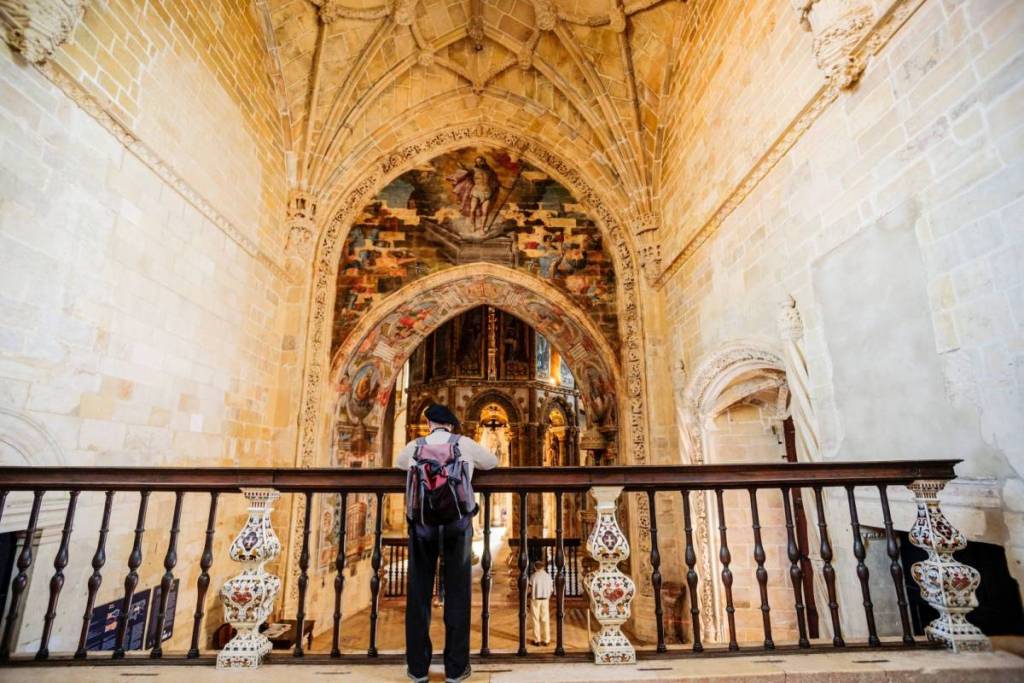
Shrouded in a mythical aura, the Knights Templar were responsible for building one of the Convent of Christ’s greatest attractions: the Charola. According to the Museums and Monuments of Portugal website, it is “one of the rare and iconic rotunda-style churches of medieval Europe,” modeled after the early Christian Basilica of the Holy Sepulcher in Jerusalem. During the reign of King Manuel I, the Charola was incorporated into the new convent church and richly decorated.
After the dissolution of the Order of the Temple in 1312, its legacy lived on in the Order of Christ, founded in 1319 at the initiative of King Dinis and heir to the Templars’ assets and privileges within the national territory.
Legends of international renown
Beyond documented history, the imagery surrounding these warrior monks has continued to fuel legends with international reach. In 2021, the British newspaper *Daily Express* covered reports of underground tunnels in Tomar, highlighting the Church of Santa Maria do Olival, and recalled the legends linking the Knights Templar to the Holy Grail. In the same article, however, it quoted historian Dan Jones, who classifies this connection as fiction and emphasizes the importance of separating myth from history.
A window worth noticing
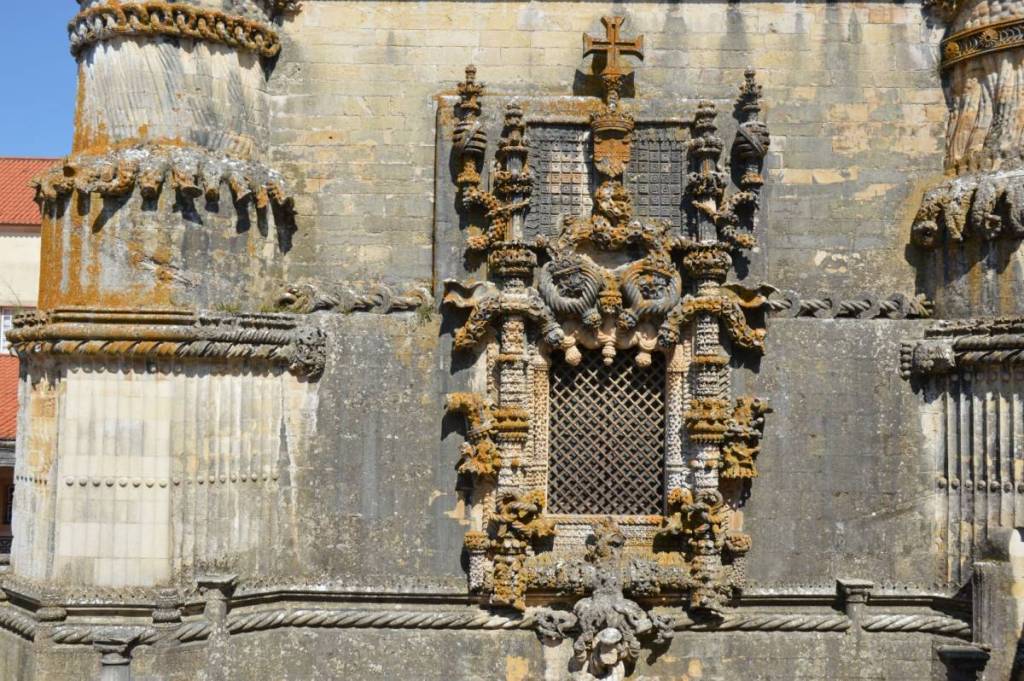
As you explore the monumental complex of the Convent of Christ, there is one spot that invites you to pause and contemplate: the Chapter Window, part of the Manueline expansion of the church mentioned above. A symbol of Portugal’s maritime expansion, it can be viewed from the Cloister of Santa Bárbara.
Seven centuries, multiple influences
If the visit gives you the feeling of traveling through different eras within a single monumental complex, it’s not just your imagination. After all, it has been transformed over the course of seven centuries. According to National Geographic Portugal, “the successive architectural styles in Portugal are etched there.” From Romanesque to Gothic, through Manueline, Renaissance, and Mannerism, the history of architecture converges in a single geographical space.
Regarding the Early Renaissance, it is important to note that this style is primarily reflected in the construction of the Convent of the Order of Christ, a cloistered monastery with a cruciform floor plan. The new convent complex, commissioned by King João III, organized its spaces around five cloisters in the Renaissance style.
Recently Restored Cloisters
And speaking of the picturesque cloisters, there’s news. Recently, the Convent of Christ underwent renovations funded under the PRR. The work on the cloisters of King João III and Santa Bárbara represented an investment of over 1.7 million euros, according to an article by SIC Notícias. As a result of this work, the Main Cloister (or Cloister of King João III) and the Cloister of Santa Bárbara—from which the iconic Chapter Window can be seen—reopened to the public in September.
The same article, published on October 3, 2026, mentions other projects at the Lavagem Cloister, in areas of the Paço Henriquino, and at the Terreiro de Armas, representing an investment of over 1.5 million euros. At the time, work on the Terreiro de Armas was scheduled to be completed in November 2026. The ground floor of the Claustro da Lavagem was scheduled to open to the public for the first time in 2027.
Useful Information
Address: Templar Castle Church, Estrada do Convento, 2300-000 Tomar
Hours: October through May, 9:00 a.m. to 5:30 p.m. (last admission at 5:00 p.m.); June through September, 9:00 a.m. to 6:30 p.m. (last admission at 6:00 p.m.)
Tickets: €15 for ages 13 and up; children 12 and under are free
Don’t miss out! Follow us on Facebook, Instagram, and now on WhatsApp too!