
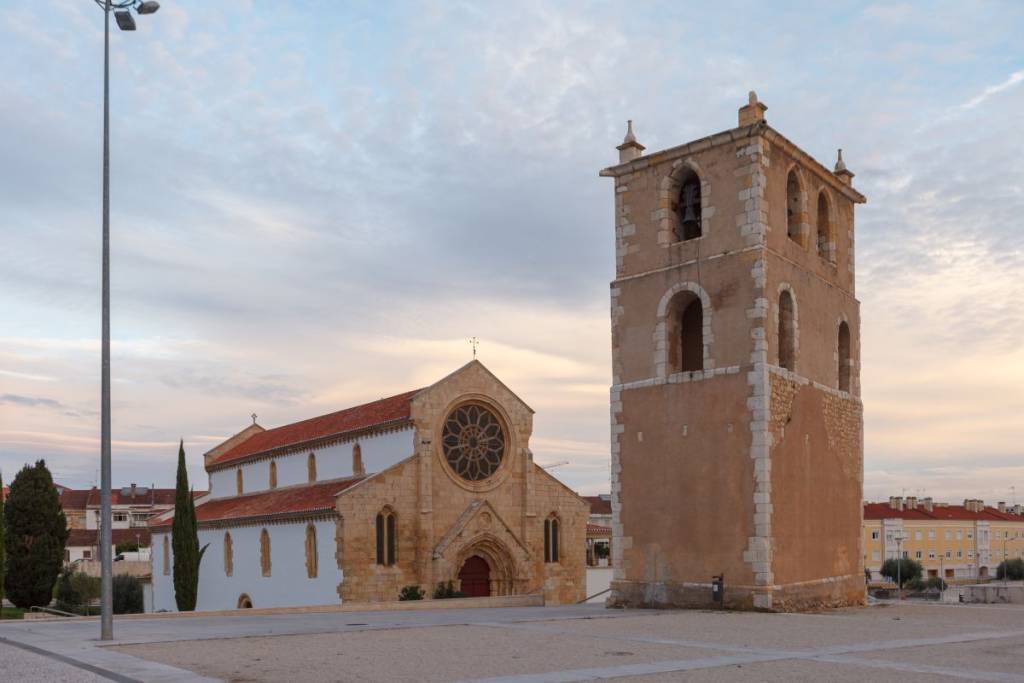

In Tomar, about a 1.5-hour drive from Lisbon, there is a church that the Tomar Tourism Office describes as the “Pantheon of the Order of the Temple.” It is called the Church of Santa Maria do Olival and is believed to have been founded in the 12th century, on the initiative of the Templar Master D. Gualdim Pais. According to the Cultural Heritage Department, it stands on part of the Roman city of Sellium, whose foundations later served as walls for an extensive medieval necropolis.
How the Templars’ Pantheon Came to Be
A cemetery for the friars
The first church is believed to have been built in the 12th century, at the request of D. Gualdim Pais, to serve as a cemetery for the friars of the Order, according to the Cultural Heritage agency. The Grand Master himself was buried there. From his tomb, according to the same record, the funerary inscription survives, dated 1195.
The tombs, however, are no longer where they once were, as they were removed by order of King João III. The remains of Gualdim Pais were moved to the second chapel, and his tombstone is now on a wall in that chapel.
The church you visit today
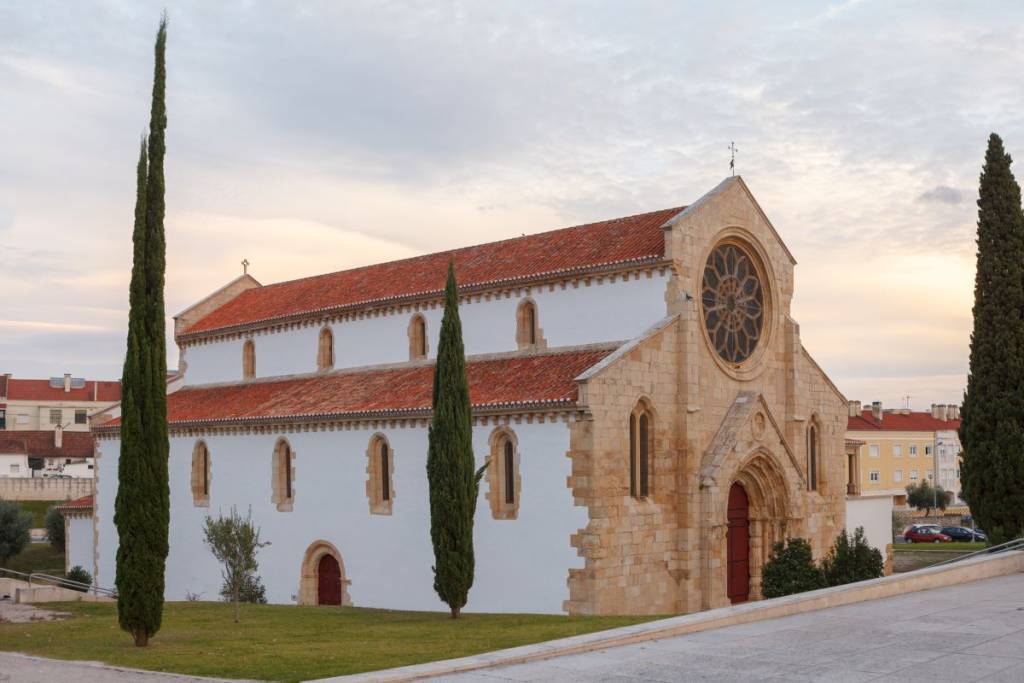
The building you are visiting today is more recent: construction of the current church began in the mid-13th century. It has three naves of different heights—the central one being the tallest—and a rose window on the façade that lets in light.
From the Order of the Temple to the Order of Christ
The importance of Santa Maria do Olival did not end with the Templars. During the period of the Order of Christ, according to Tomar Tourism, it became“the mother church with jurisdiction over all the overseas churches of the Age of Discovery.” The City Council links this to a papal bull dated March 13, 1455.
In the chancel stands the Renaissance tomb of the first bishop of Funchal, D. Diogo Pinheiro, who was buried here between 1525 and 1528. The church has been a National Monument since the decree of June 16, 1910.
The secret lying beneath the ground
A Roman City and a Medieval Necropolis
Part of this history lies buried. The church occupies part of what was once the Roman city of Sellium. Excavations have uncovered the foundations of buildings from the time of the Roman Empire, which later served as supports and walls for an extensive medieval necropolis.
The Tunnel to the Castle
Right in front of the church stands a tower. The Tomar Tourism Office states that it is believed a tunnel once existed there between the church and the Templar Castle, and Visit Portugal, part of the Portuguese Tourism Board, notes the same idea. It is a belief, not a discovery.
How to Visit
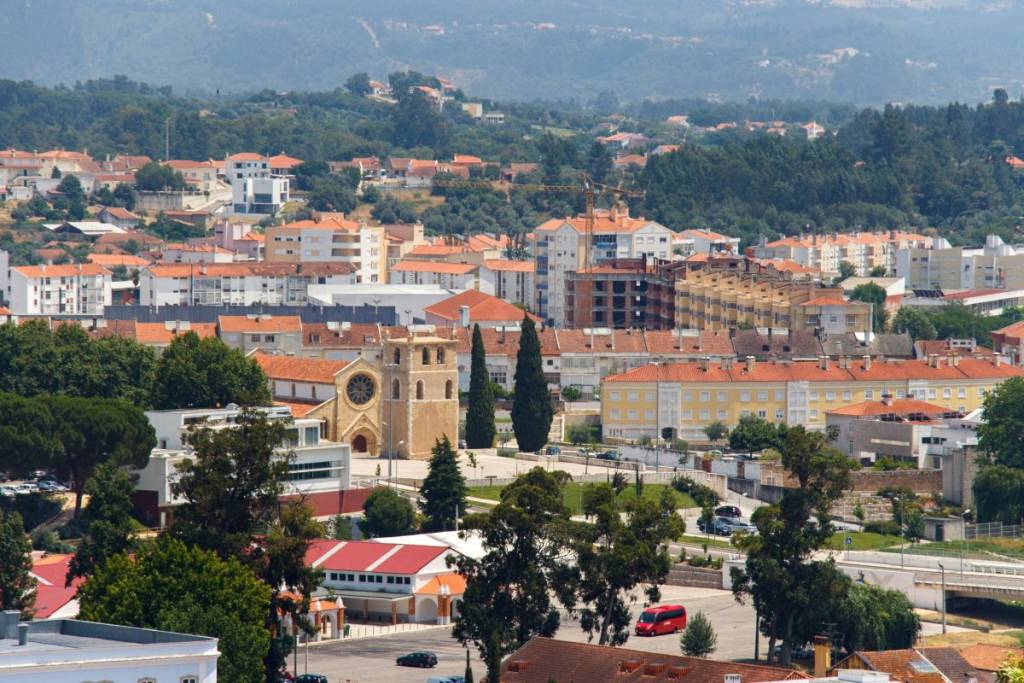
The church is located across from the Convent of Christ, overlooking the Templar Castle, according to the Templar Route. If you’re visiting Tomar to see the Convent— a UNESCO World Heritage Site since 1983—be sure to add this stop to your itinerary.
Don’t miss out! Follow us onFacebook,Instagram, and now onWhatsApp too!