
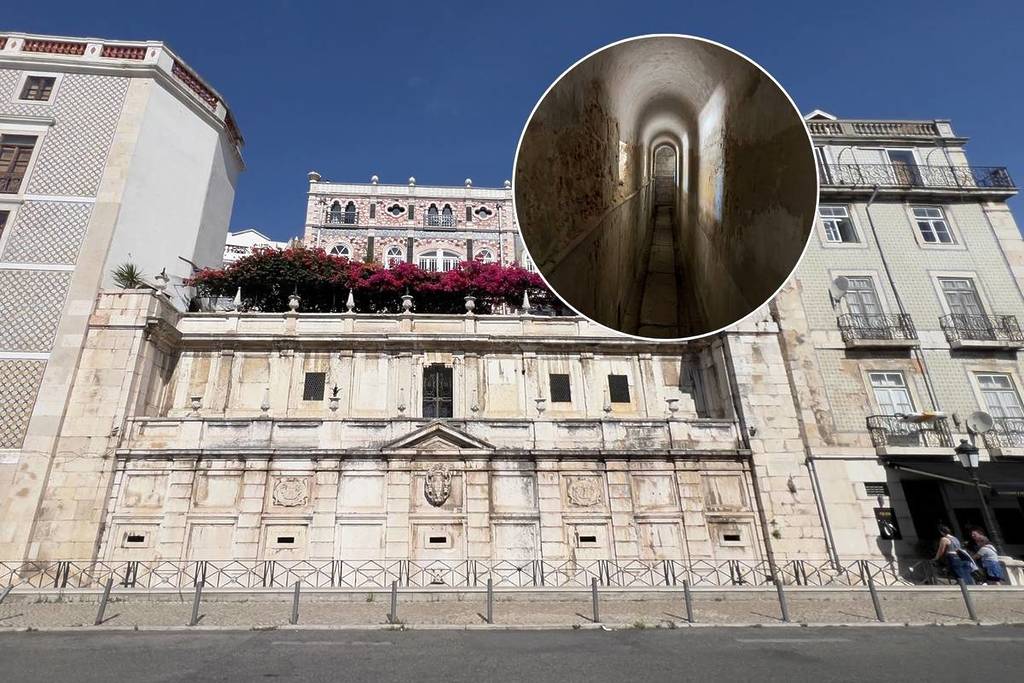

Lisbon is a city of many layers. Beneath the asphalt and trams of our city, centuries of history “sleep,” sometimes revealing themselves to those curious enough to peek through the right keyhole.
Recently, we had the privilege of accessing one of these “forbidden” places: the interior of the Chafariz d’El-Rei.
If the façade is an icon of Alfama, what lies inside is a time capsule that transports us to a Lisbon that no longer exists, but whose marks remain alive.
A legacy of over 800 years
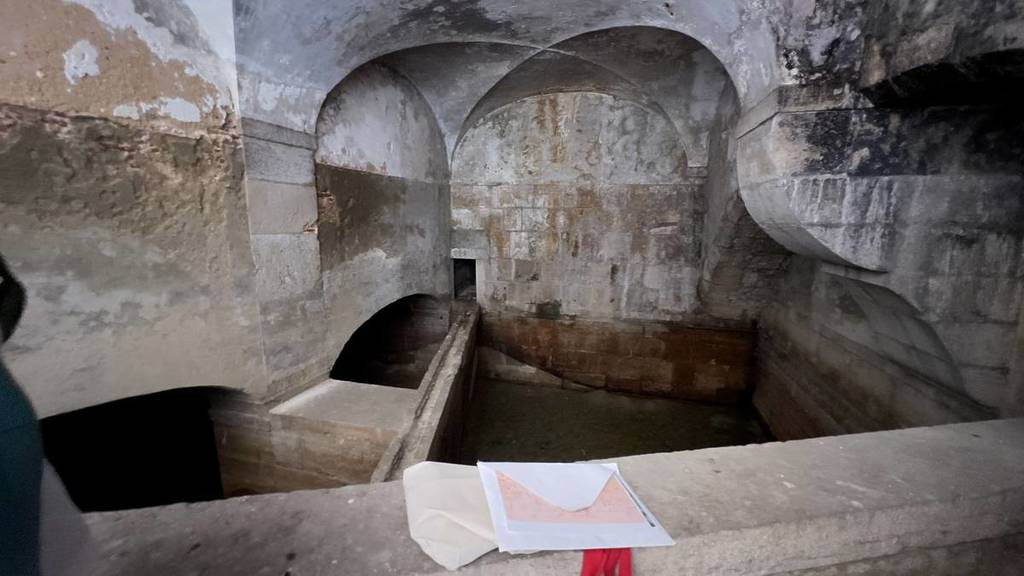
The history of this place is not told in decades, but in centuries. There are records of its existence since at least 1220, during the reign of King Afonso II. Imagine the importance of this spot at a time when piped water was a luxury that did not exist; this fountain was the beating heart of the city, fed by water from an aquifer beneath the Castle of São Jorge.
However, the structure we see today, with its more refined architectural features, has been shaped over time. In 1487, a milestone in the hydraulic engineering of the time occurred: the construction of a specific pipeline to carry water directly to the Tagus. The goal was to supply the ships that were setting sail for the Discoveries. It was here that the survival of sailors who would spend months on the high seas was guaranteed.
The hierarchy of water: the shock of segregation
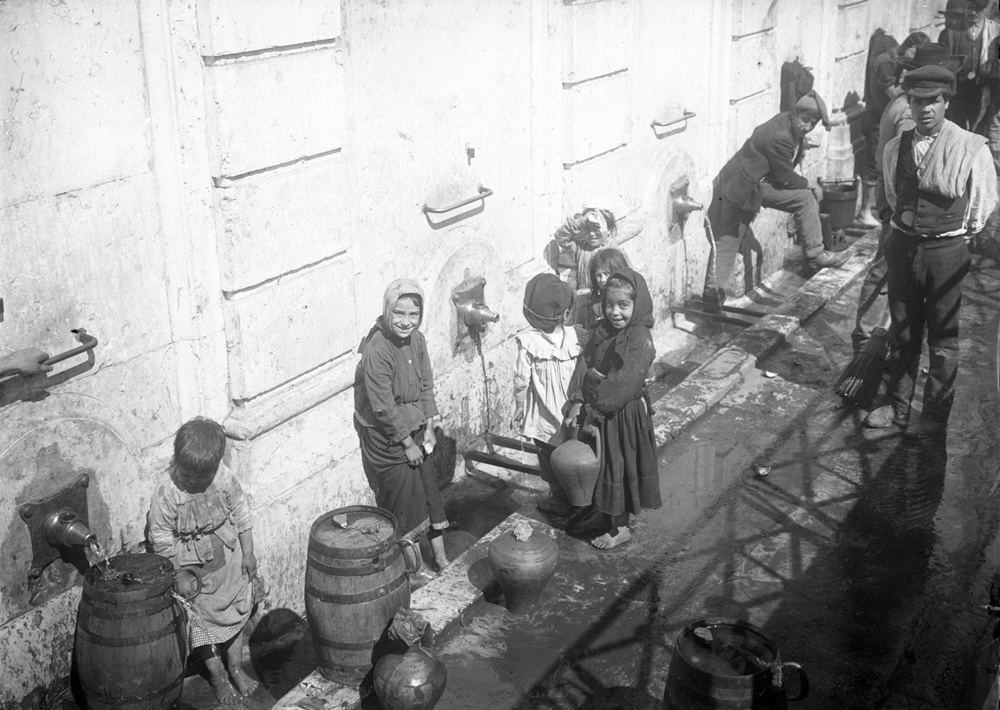
As we enter the narrow, cool tunnel behind the façade, the excitement of discovery gives way to heavy reflection: guide and archaeologist Pedro Miranda reminds us that access to water was anything but democratic. In the 16th century, scarcity was such that violence was common, leading the Crown to implement a strict system of social and racial segregation.
Each fountain had a “owner” by law:
- The fifth spout was intended for black and mulatto men;
- The third and fourth spouts were reserved for black women, mulatto women, Indian women, and captives;
- The last bica (on the Alfama side) was exclusively for women and “white girls.”
It is impossible to walk through these corridors without feeling a tightness in your chest as you imagine the queues, the insults, and the constant surveillance to ensure that no one “drank outside their spout.”
The punishments were severe and public order depended on maintaining these invisible but insurmountable barriers. Have you ever stopped to think that the simple act of turning on a tap at home is a freedom that our ancestors never dared to dream of?
Engineering and survival
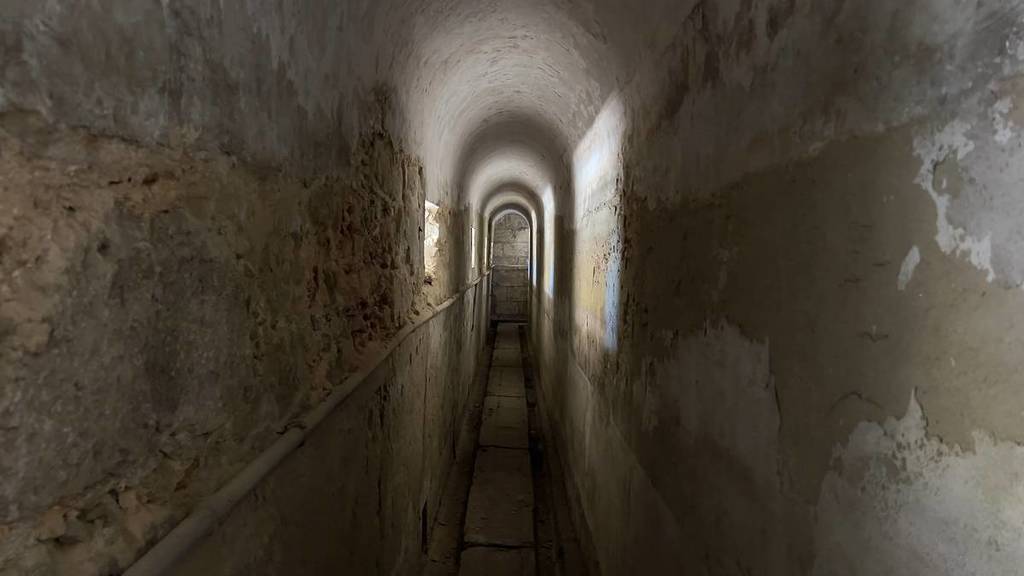
Walking inside the fountain allows us to see the robustness of the stone and the carved channels that have withstood earthquakes and the wear and tear of time.
The complexity of the 1487 system is impressive; seeing how gravity was manipulated to serve the Port of Lisbon is a testament to human resilience and ingenuity.
How can you visit?
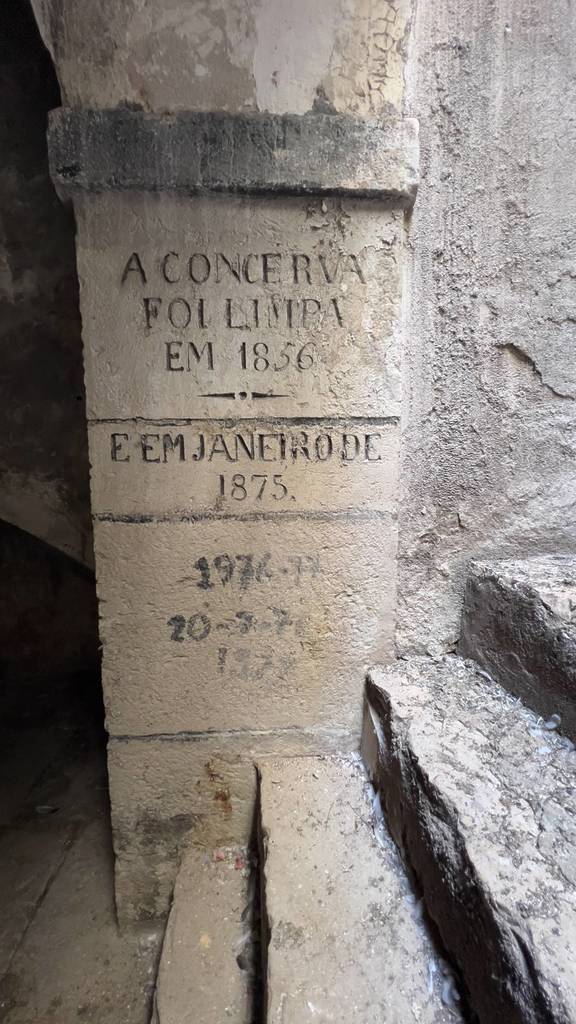
The Chafariz d’El-Rei is more than a monument; it is a mirror of our glories and our shadows. It reminds us of the Lisbon of navigators, but also the Lisbon of exclusion. Leaving there, back in the sunlight of Alfama, makes us look at the city with different eyes, the eyes of those who know that stones speak, if we know how to listen.
These spaces are usually closed to the general public. However, the opportunity to visit them arises annually through initiatives such as Open House Architecture or by checking the Lisbon Museum’s program, usually during the month of September.
It is, in fact, a recommended experience if you want to see the capital without filters.
And you? Did you know that water in Lisbon once had color and social class? Would you like to explore this tunnel, or should the past remain buried?
Useful information:
Address: Rua do Cais de Santarém (Alfama)
Opening hours: 24 hours (outside visits)