
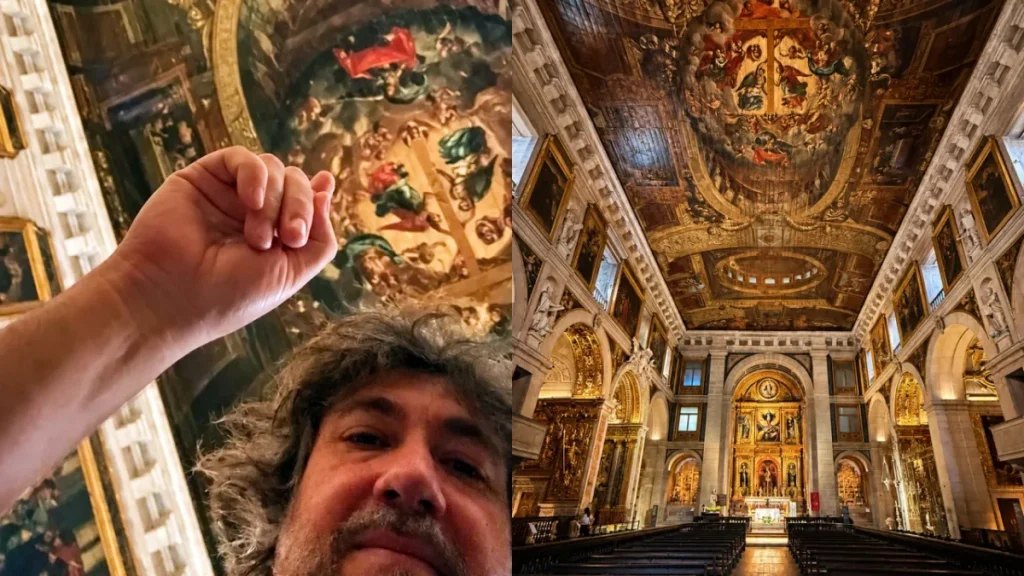

Before it was adorned with detailed panels and chapels transported by sea, the site of the Church of São Roque served a funerary purpose. The location where the building stands once functioned as a cemetery for the victims of the plague in Lisbon.
Today, the site is one of the rarest surviving examples of the city’s layout prior to the 18th-century catastrophe —the 1755 earthquake.
The chapel that traveled by boat
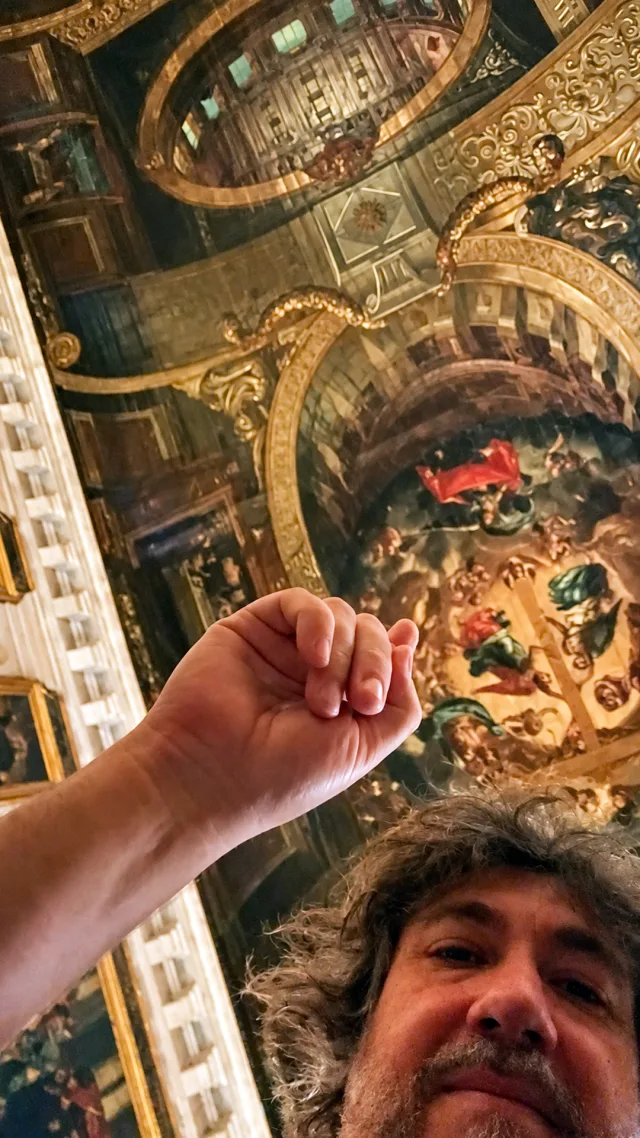
When you enter the church and look up, you’ll encounter an optical illusion: the ceiling, made entirely of wood, projects the image of several imposing domes.
The surface is completely flat, consisting of an optical illusion created between 1587 and 1589 by the painter Francisco Venegas. The artist painted three false domes in perspective, creating the only Mannerist-style ceiling still in existence in the city.
A “resilient” church
The church’s collection includes structures that crossed the sea before coming to rest there. The Chapel of St. John the Baptist was built from the ground up in Rome and consecrated by Pope Benedict XIV. To reach the Portuguese capital, the structure had to be transported by boat and assembled at its final location.
The preservation of this artistic and architectural ensemble is due to the building’s remarkable resilience. The church remained almost intact during the 1755 earthquake, preserving to this day its centuries-old wooden ceiling and the memory of the ground upon which it stands.
Don’t miss out! Follow us onFacebook,Instagram, and now onWhatsApp too!