
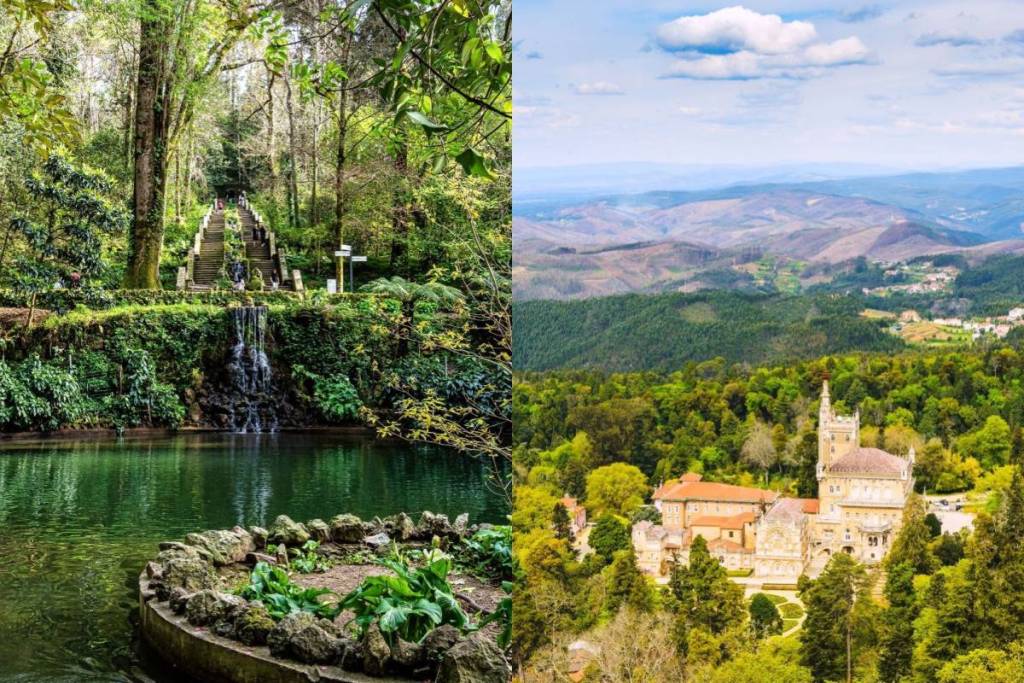

On July 17, the Bussaco National Forest will receive certification as the first Therapeutic Forest on the Iberian Peninsula. In this guide, we’ve compiled everything you need to know about this green sanctuary with nearly 400 years of history: what to see, what to do, how to get there from Lisbon, and where to stay.
A rare distinction on a global scale
The certification is awarded by the International Office for the Certification of Therapeutic Forests and is the result of an application process conducted jointly by the Mata do Bussaco Foundation and Destinature, with the Grande Hotel do Luso also involved.
With this recognition, Bussaco becomes the fourth certified therapeutic forest in the world, joining a very select group of just three other forests worldwide. The distinction aims to position Bussaco on the international health and wellness tourism circuit.
Nearly 400 years of history
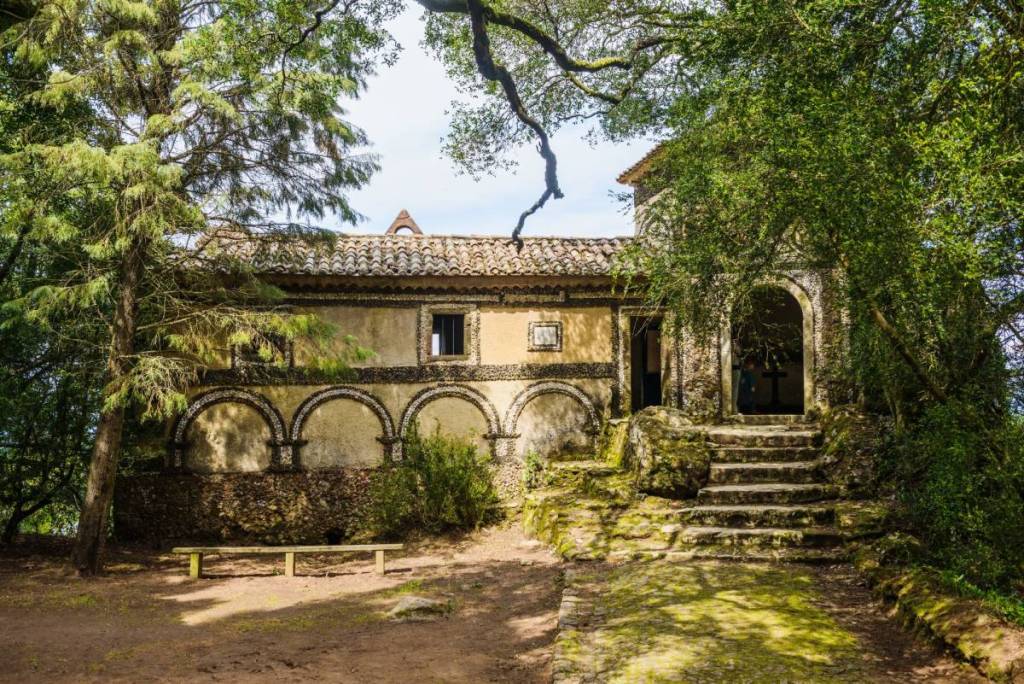
The history of Bussaco dates back to 1628, when the land was handed over to the Order of Discalced Carmelites, who established a place of retreat and prayer there that they called “Deserto.” A 17th-century papal decree would go on to protect the silence and isolation of the site—a protection that, in a way, can still be felt today. It was the monks who, beginning in 1656, started introducing species from abroad, most notably the famous Bussaco cedar, brought from Mexico and considered the first exotic tree ever planted in the forest.
The site has also earned a place in Portuguese military history: on September 27, 1810, Bussaco was the scene of the battle that pitted Anglo-Portuguese troops, led by the Duke of Wellington, against General Masséna’s Napoleonic forces—a decisive clash during the French Invasions, with the convent serving as Wellington’s base of operations.
The Carmelites’ presence ended in 1834, with the abolition of religious orders in Portugal. Under state administration, between 1856 and the end of the century, the forest gained new gardens, lakes, and fountains, including the Jardim Novo and the Vale dos Fetos. It was also during this period, in 1888, that King Carlos I commissioned the construction of a hunting lodge that would become the current Palace Hotel do Bussaco, designed by Italian architect Luigi Manini in the Neo-Manueline style. Due to the monarchy’s financial difficulties, the palace never served as a royal residence and was later converted into the now-iconic Palace Hotel do Bussaco. The Bussaco Forest is classified as a National Monument.
What to see and do in the forest?
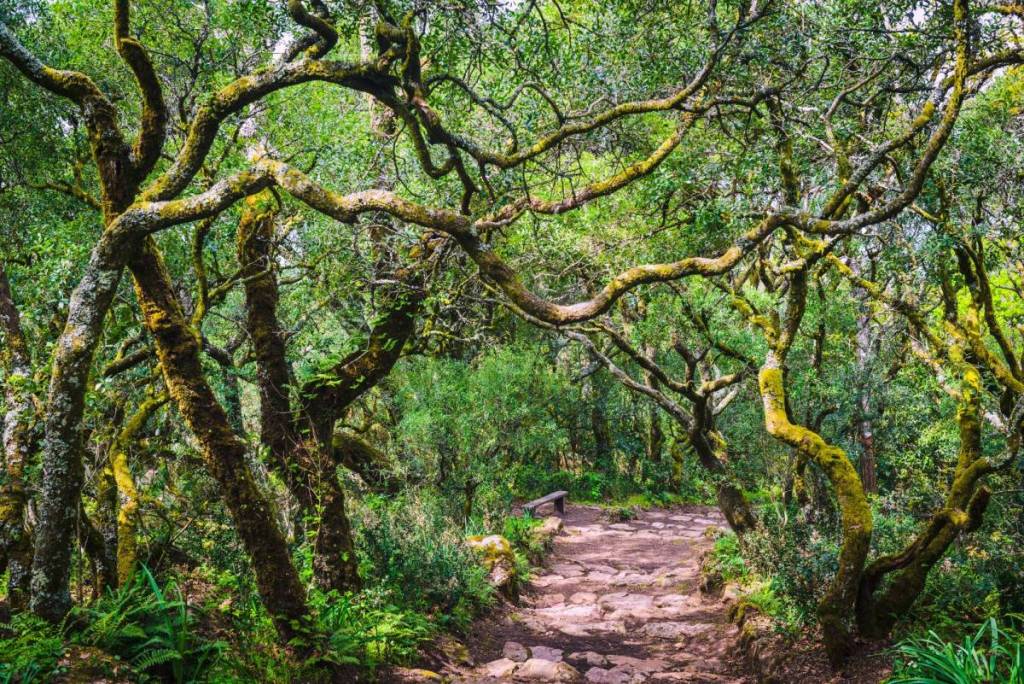
Covering about 105 hectares and boasting one of Europe’s finest dendrological collections—with some 250 species of trees and shrubs—the forest is also known for its collection of camellias, which bloom between February and May. It’s worth seeking out the Relic Forest, which occupies about 15% of the woodland in the highest and rockiest part of the mountain range; it escaped the introduction of exotic species and still preserves today the characteristics of the primeval forest that existed before the monks arrived.
Among the most visited attractions is the Bussaco Palace, which can be admired from the outside even by those not staying at the hotel, including a stroll through the Jardim Novo. It’s also worth visiting the ruins of the Convent of Santa Cruz, the Bussaco Military Museum—founded in 1910 and housing a collection dedicated to the Battle of 1810—the Via Sacra, the Valley of the Ferns, the Fonte Fria staircase, the Great and Small Lakes, and the Cruz Alta Viewpoint, at an altitude of 550 meters, offering views of the Relic Forest and the entire region. The forest features several themed trails, and for those who wish to explore further, there is also the Grande Rota do Bussaco, a 56-kilometer route divided into three branches connecting the forest to Mealhada, Mortágua, and Penacova.
Where to stay and eat?
The most iconic option is to stay right in the forest itself, at the Palace Hotel do Bussaco, housed in the former royal palace. A nearby alternative is the Grande Hotel do Luso, in the neighboring village of Luso—a long-standing partner of the Mata do Bussaco Foundation and one of the driving forces behind the certification application—which is also close to the Luso hot springs, a great way to extend your wellness experience after a day in the forest.
For those who want to bring the experience to the table, the region is close to the home of the famous Bairrada-style roast suckling pig, served in restaurants in nearby Mealhada, and Bussaco wine, which has been produced in the region for decades.
How to get there from Lisbon?
Mata do Bussaco is located in the village of Luso, in the municipality of Mealhada, about 230 km from Lisbon—a drive of about 2 hours and 15 minutes on the A1, exiting at Mealhada or Luso. By train, there is no direct connection from Lisbon: you must take a train to Coimbra-B and transfer to the Luso-Bussaco station.
Useful Information
Where: Bussaco NationalForest , Luso, municipality of Mealhada, district of Aveiro
How to get there: about 230 km from Lisbon, a 2-hour and 15-minute drive on the A1; by train, with no direct connection, transfer at Coimbra-B to the Luso-Bussaco station
Where to stay: Palace Hotel do Bussaco (inside the forest) or Grande Hotel do Luso (in the neighboring village)
Don’t miss: Cruz AltaViewpoint , Military Museum, Santa Cruz Convent, Via Sacra, and Vale dos Fetos
Sometimes, finding the latest news from Lisboa Secreta online is like looking for a needle in a haystack. Not anymore! Bookmark us asa Favorite Source.