
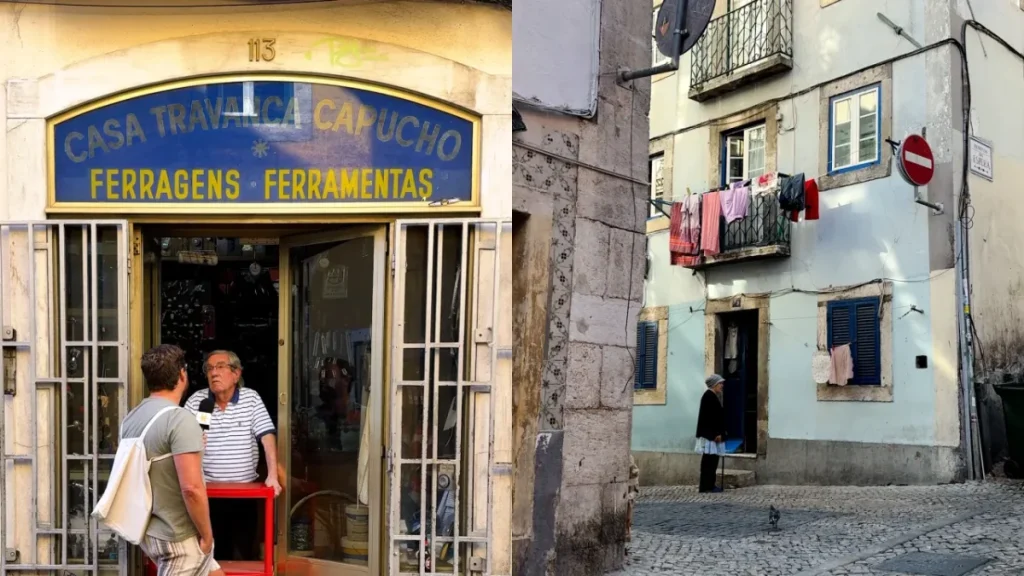

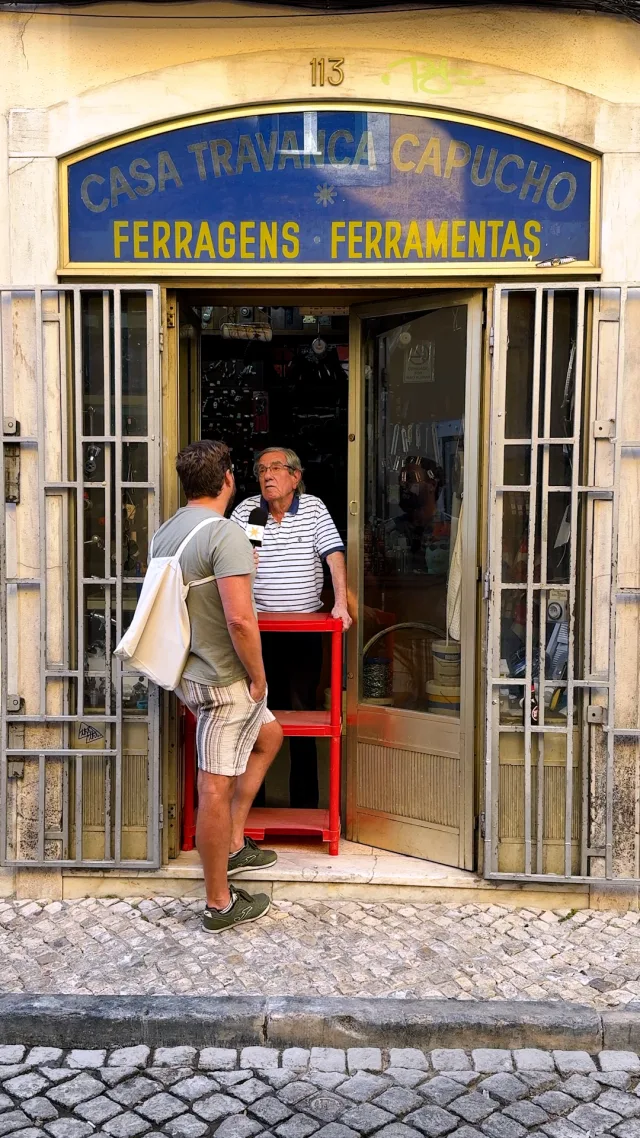
The owner of the Casa Travanca Capucho hardware store used to be the man with the most screws in Bairro Alto. For years, he sold supplies—such as locks and tools—for the ongoing reconstruction of homes in the area.
Today, with the loss of the neighborhood and the drastic change in the residential fabric, shop owners see their businesses emptying out and no longer know how much longer they’ll be able to keep their doors open.
Traditional commerce, once sustained by those who lived there, now faces streets where the original residents have given way to passing visitors.
The end of village life
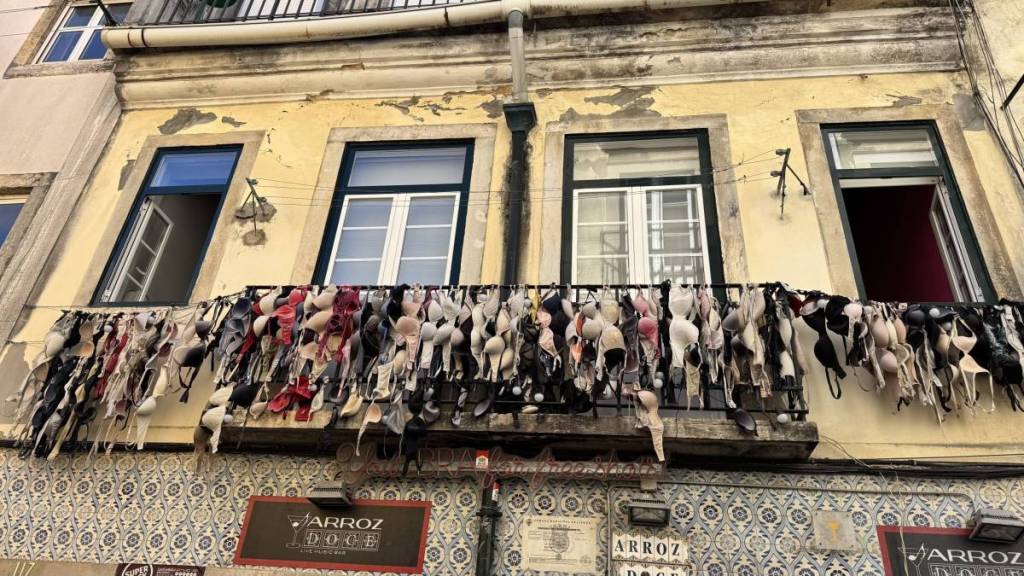
Those who knew the old way of life describe the area as a true village. There was a vibrant market, neighbors knew each other by name, chatted on the streets, and the popular parades brought life and joy to the neighborhood.
Today, the reality imposed by tourism and nightlife has transformed daily life. On the busiest weekends, the crowds in the narrow streets are so dense that it becomes almost impossible to walk.
Constant noise pollution has led to drastic changes in the daily lives of those who still remain, with residents reporting that they are forced to sleep with earplugs in order to get any rest.

Little by little, the resident population has been replaced. Real estate pressure dictates the rules, with building owners choosing to hold onto their properties, preferring to monetize the units by converting them into short-term rentals.
The result has been the steady departure of those who lived on these streets permanently.
The overcrowded city and the end of local services

In the neighborhood’s streets, locals often divide the surge in tourism along a clear timeline: “pre-Madonna” Lisbon and “post-Madonna” Lisbon.
The sharing of images and videos of the city on social media by international figures—later followed by a significant influx of digital nomads—served as a catalyst for depopulation. Today, it’s possible to walk through the neighborhood without coming across a single familiar face.
This population decline has a direct and severe impact on the survival of neighborhood shops and the availability of basic necessities. Without permanent residents to sustain the local economy, essential services have disappeared from the area. The neighborhood has lost its go-to pharmacy and has seen the local bank branch close its doors for good.
Behind the counter of their hardware store, the remaining shopkeepers continue to work in their shops, but uncertainty has taken hold irreversibly.
What once seemed to them to be a solid business, secure for the rest of their lives, has turned into a daily uncertainty—in a neighborhood where the sense of community has faded and where the return of former residents is seen as unlikely.
Don’t miss out! Follow us on Facebook, Instagram, and now on WhatsApp too!