
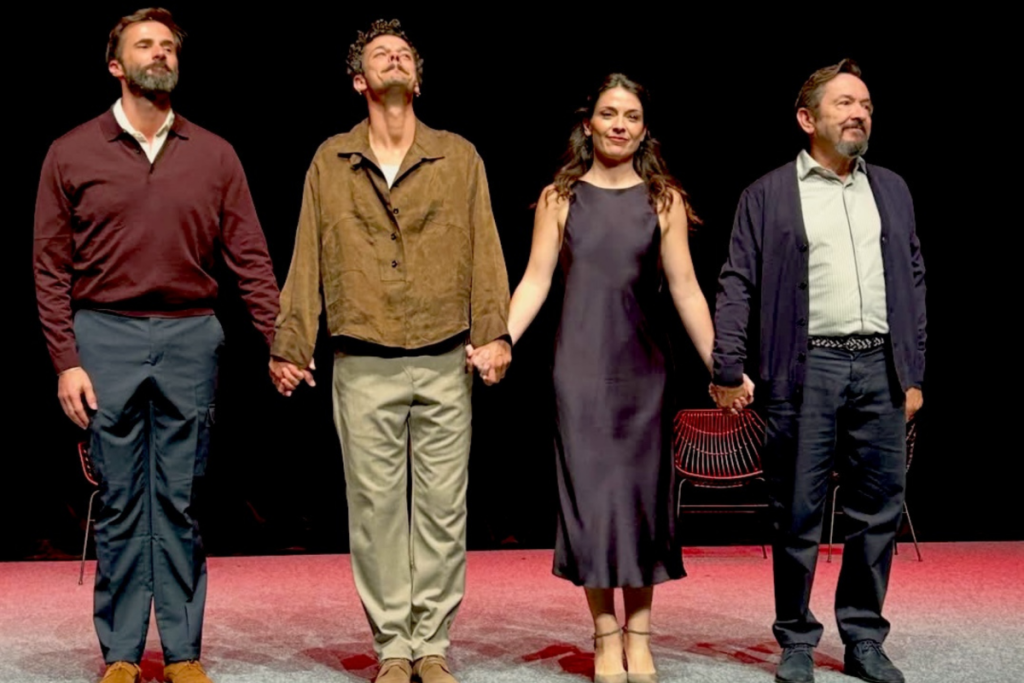

After 12 years with the same boyfriend, João breaks up with him and, a few weeks later, falls in love with a woman. João doesn’t know what this says about him, but the people around him want an answer.
From this point on, he questions his own sexuality and what he truly enjoys, which places him in the dilemma of whether he prefers to be loved and accepted for who he is, or whether he prefers sex itself?
A choice born of exhaustion
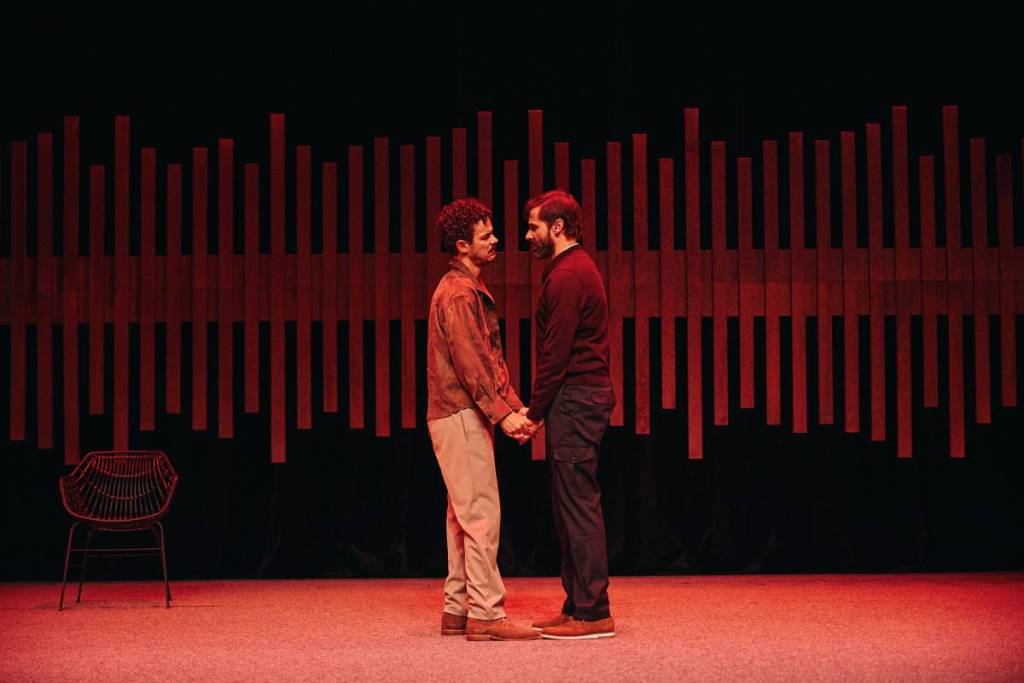
The conflict reaches its climax during an explosive dinner where everyone gathers and argues. Under the weight of manipulation and pressure, João is forced to choose not only who he wants to be with, but also the sexual label he will have to embrace.
No one asks him what he wants: everyone tells him what he should want. His boyfriend, his new girlfriend, and, at one point, even his boyfriend’s father demand that he choose a “side”—not just out of love, but because his hesitation and fluidity destabilize them and threaten their own identities.
When João finally decides, it doesn’t feel like a revelation. It feels like exhaustion. He gives in just to end the argument, and that’s what makes the ending uncomfortable: a play about sexual freedom ends with someone accepting a label just to have peace.
Standing ovation
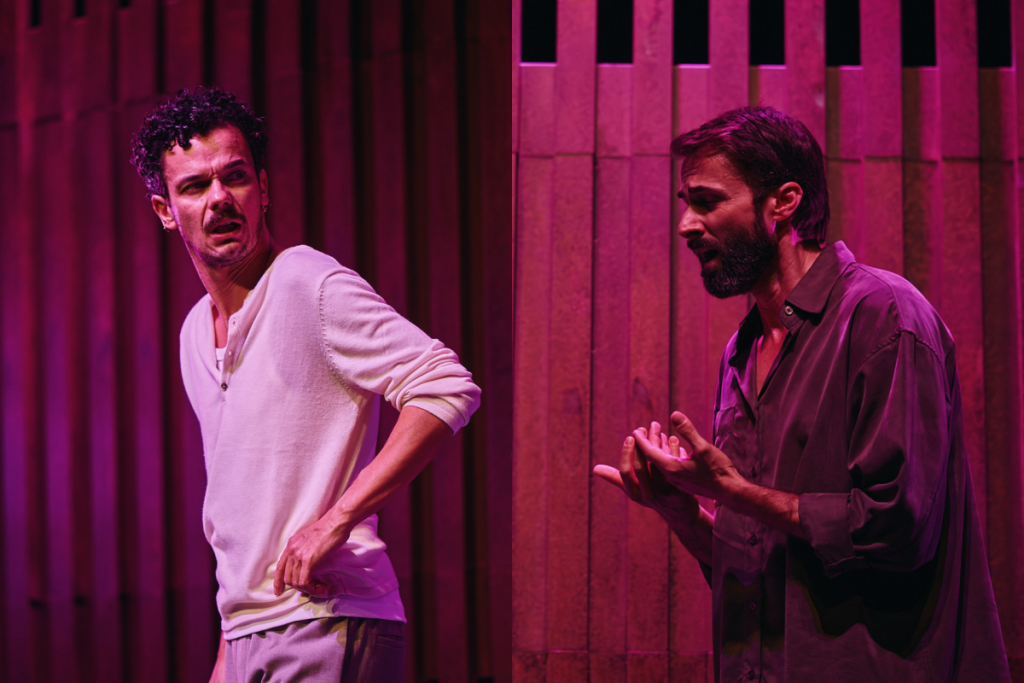
Ricardo Neves-Neves directs an intense play and punctuates it with moments of humor, which here and there (though not very consistently) break the tension of the subject matter. In this comedic vein, all the actors (Adriano Luz, Cristóvão Campos, Gabriela Barros, and Romeu Costa) stand out, some more than others.
A big round of applause for Cristóvão Campos, who plays João, caught here between two loves and with his head constantly “in a whirl.” By the end of the play, his physical and emotional exhaustion is clearly evident, revealing an extreme dedication to the role he was given. His character’s pain resonates so powerfully with the audience that we actually feel sorry for him and have absolutely no desire to be in his shoes, faced with such difficult decisions.
In short, the entire cast is excellent, but it is in João’s inner turmoil that the play truly comes to life.
Set, lighting, and sound
The set is minimalist: half a dozen slatted wooden curtains that rise and fall as the scenes change.
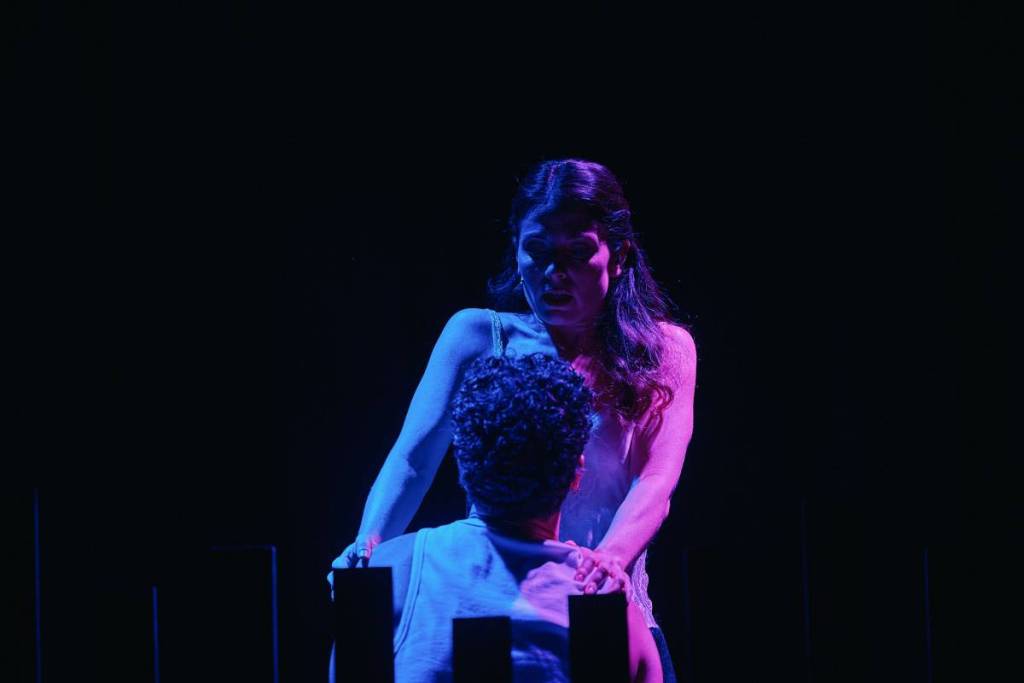
In the soundtrack, muffled chimes announce each scene change, while the warm, enveloping lighting perfectly complements the story being told, never distracting our attention from the four actors on stage.
Final Act
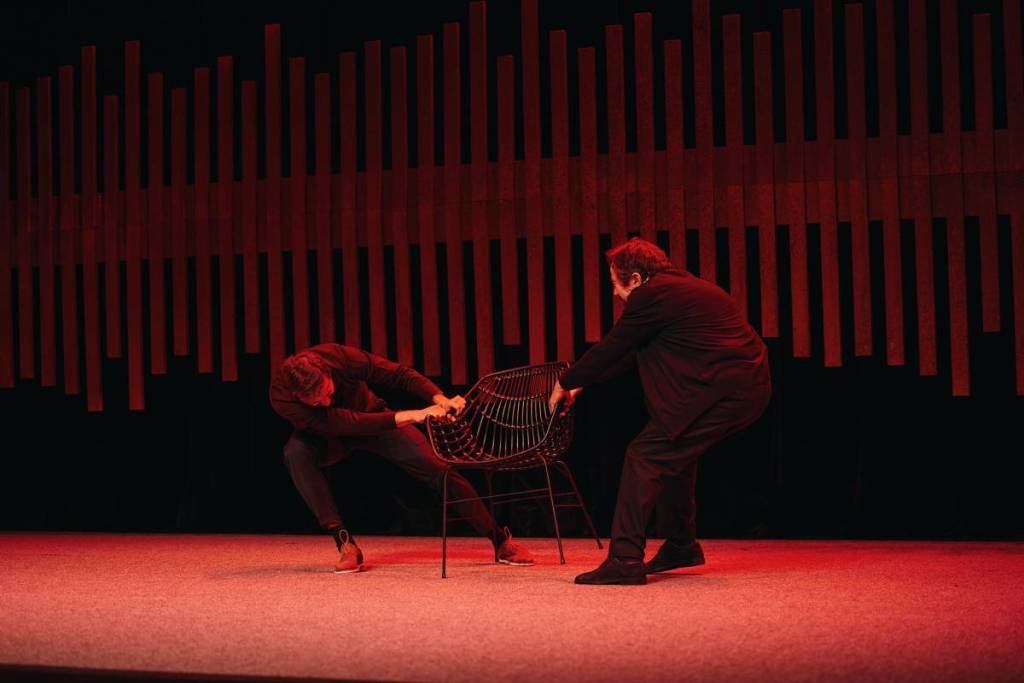
The text struck us as timely and relevant, even though few such cases are known to the public, since this is an intimate situation that concerns only those who experience it. Still, the dilemma boils down to something very common: it shows how we “force” people to choose a side, rather than accepting them as they truly are.
With nearly two hours of intense acting, we didn’t even notice the time passing, so it seemed to us the ideal length to tell this story, even though the ending didn’t provide a clear resolution—which is consistent with João’s constant indecision, leaving each viewer free to choose what João’s life will be like after that dinner.
As the curtain falls
"COCK" deals with a subject that few will have to face, but it touches on the indecisions in everyone’s life.
When the heart is torn, we choose between a more comfortable and happy life and staying with the one we truly love—even if that doesn’t always bring us happiness.
I left the theater without an answer for João, and perhaps that is the best tribute to the play.
Credits:
Text, direction, and set design: Mike Bartlett, Ricardo Neves-Neves, and Fernando Ribeiro
Cast: Cristóvão Campos, Gabriela Barros, Romeu Costa, and Adriano Luz
Production: Força de Produção
Venue: Maria Matos Theater (Avenida Frei Miguel Contreiras, 52)
Showtimes: Mondays and Tuesdays at 9:00 p.m. (through December 22)
Price: €21–€23, on the website
Age rating: M/16
Don’t miss out! Follow us on Facebook, Instagram, and now on WhatsApp too!