
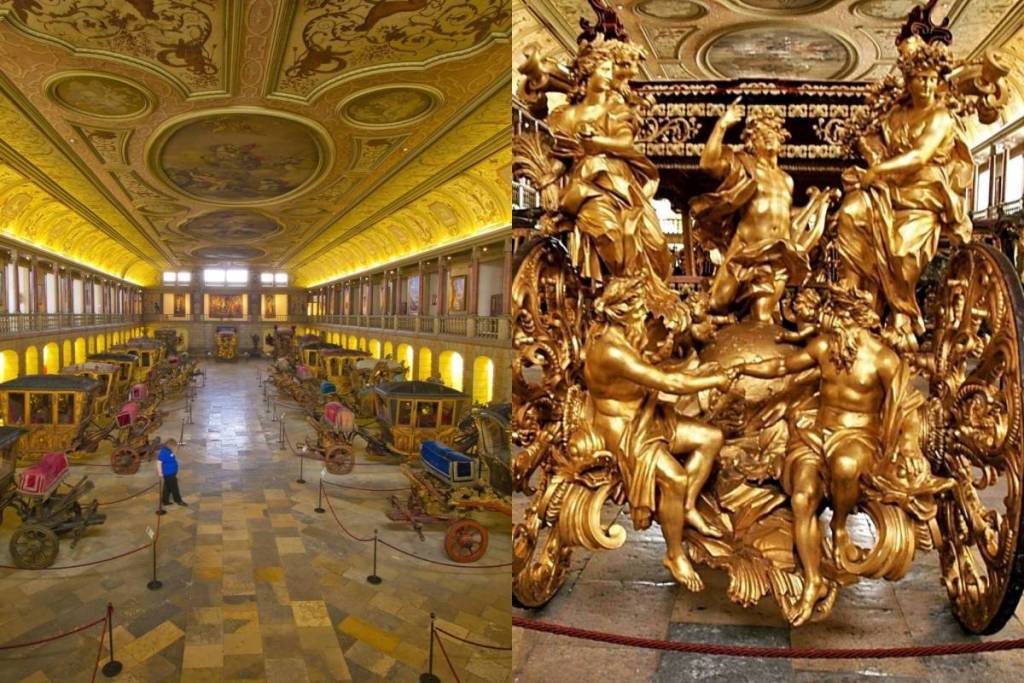


Strolling through Belém is always a good idea, but did you know that number 136 on Avenida da Índia hides “a collection of ceremonial and passenger carriages from the 16th to the 19th centuries that is unique in the world,” as described on the Museums and Monuments of Portugalwebsite? Housed in a modern suspended concrete building, the National Carriage Museum boasts a truly impressive collection.
If you think seeing antique carriages up close is synonymous with monotony and dust, think again. From extremely ostentatious examples in gilded woodcarving to the first automobile to arrive in Portugal—not to mention the “evidence” of an assassination that forever changed the course of the country—stepping into the National Coach Museum is like diving into an immersive journey through time. And the best part? You can explore the museum at your own pace with the help of an audio guide on your phone ( Android and iOS; headphones not included).
National Coach Museum: E-ticket with Audio Tour on Your Phone
22 October 2026 14:00 + more dates
Av. da Índia 136
From royal heritage to national treasure
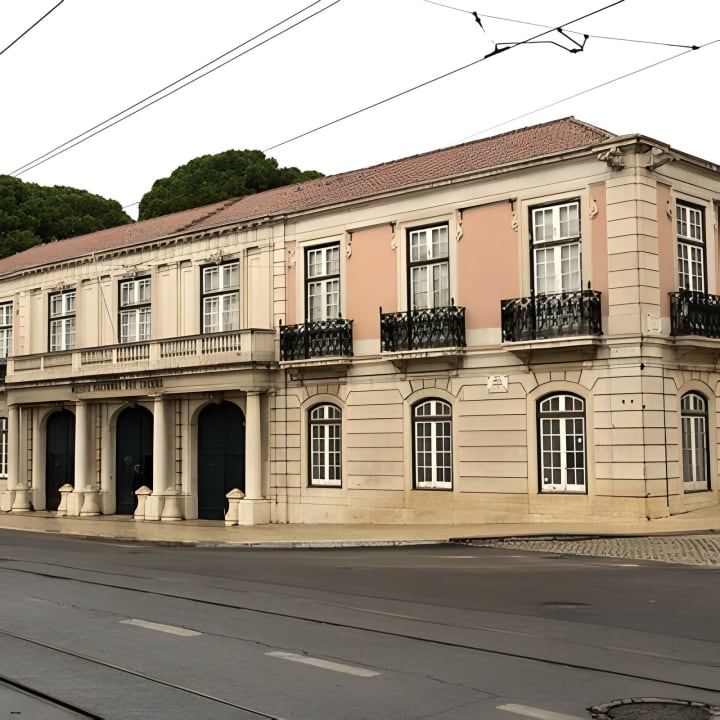
To tell the story of the National Coach Museum, we must go back to 1905, when it was inaugurated at the initiative of Queen Amélia (wife of Portugal’s penultimate king, Carlos I). At that time, the queen consort’s goal was to safeguard the royal family’s collection of carriages, preserving their legacy in the face of the “threat” posed by technological advances, such as the introduction of automobiles. The location chosen to prevent these artifacts of a vanishing way of life from being lost forever was the former Royal Riding Arena, which remains under the jurisdiction of the National Carriage Museum to this day.
With the fall of the Portuguese monarchy, the museum’s collection expanded with the addition of new carriages from the defunct Royal House, vehicles from Church holdings, and some pieces from private collections. From animal-drawn vehicles to the first automobile to arrive in Portugal, at what is one of Lisbon’s most visitedmuseums, you can closely follow the technical and artistic evolution of different vehicles. However, the collection is not limited to the vehicles themselves; it also includes cavalry harnesses, ceremonial and service uniforms for the carriages, 18th-century procession accessories, and more.
The talent of a Pritzker Prize winner
Currently, the National Coach Museum consists of two complementary spaces in Belém: the site where the former Army General Workshops were located and the former Royal Riding Arena, which was no longer sufficient to meet the museum’s exhibition needs. Consequently, in 2015—110 years after its founding— the museum moved to a new location.
Designed by architect Paulo Mendes da Rocha—winner of a Pritzker Prize (a sort of “Oscar” of architecture)—in collaboration with Portuguese architect Ricardo Bak Gordon and engineer Rui Furtado, the new building stands out for its continuous concrete floor and white walls occasionally interrupted by openings or display cases. Furthermore, the project was designed to be much more than a museum, created to integrate with and engage the public space through a large, freely accessible interior plaza.
The stars of the collection
According to the website “Monuments and Museums in Portugal,” in 2025 alone , the National Coach Museum and Royal Riding Hall welcomed 193,614 visitors, making it one of the most visited museums in the Portuguese capital. And, indeed, there’s no shortage of reasons to embark on this journey through time. Even so, we’ve decided to highlight a few crown jewels:
- The carriage of King Philip II of Portugal (King Philip III of Spain) —the oldest animal-drawn vehicle in the collection, dating from the late 16th or early 17th century. It is a simple wooden box lined with leather, still lacking any suspension system, which was used to transport the monarch from Madrid to Lisbon on a journey lasting more than 60 days.
- Symbols of opulence and the Baroque —the carriages that carried the Portuguese embassy to Rome in the 18th century for a meeting with Pope Clement XI are true symbols of opulence. The Carriage of the Oceans is the most famous of the collection and is considered a true masterpiece, covered in gilded woodcarvings and life-size statues representing the union between the Atlantic and Indian Oceans
- The Regicide Landau— the fall of the monarchy in Portugal is inextricably linked to the regicide of 1908, which fatally claimed the lives of King Carlos I and Crown Prince Luís Filipe at Terreiro do Paço. And this is no ordinary vehicle, for it was the one in which the two most prominent figures of the Portuguese royal family were traveling when they were assassinated.
Useful Information
Address: Avenida da Índia, 136
Hours: Tuesday through Sunday, 10 a.m. to 6 p.m.
Admission: standard tickets start at €15, but you can check the official website for all available options
Don’t miss out! Follow us on Facebook, Instagram, and now on WhatsApp too !